
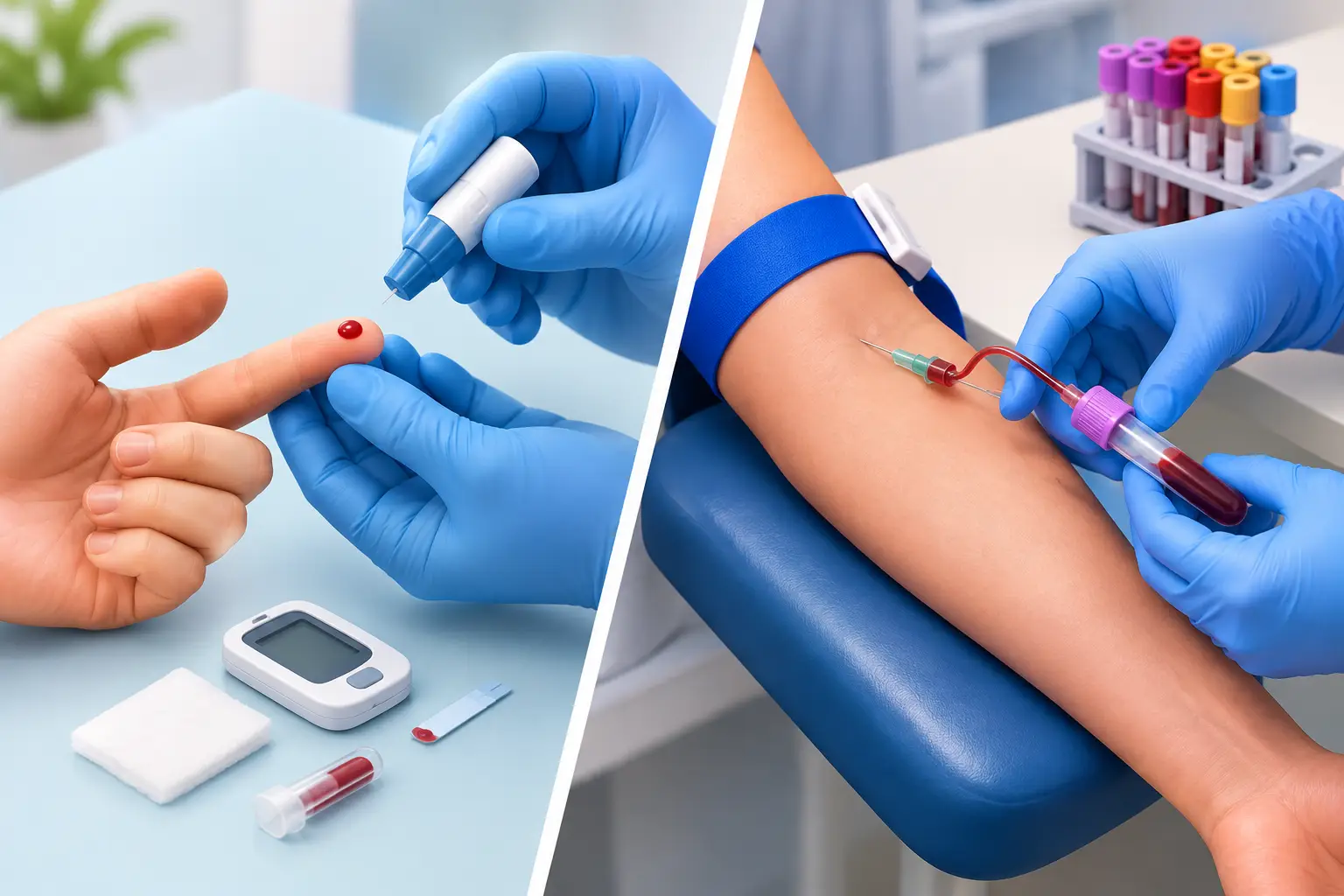
A blood test should fit the question being asked, as well as your day. When comparing fingerprick versus venous blood draw, the key difference is not simply convenience. Each collection method produces a different type and volume of sample, which can affect which tests are suitable and how reliably certain results can be measured.
For many routine health checks, a properly collected fingerprick sample can offer a practical way to test from home. For other investigations, particularly where a larger sample volume, repeat analysis or specific laboratory methods are required, a venous blood draw is the better option. Understanding the distinction can help you choose with confidence.
What is a fingerprick blood sample?
A fingerprick test uses a single-use lancet to make a small puncture in the side of a fingertip. Drops of capillary blood are collected into a small tube or onto a specialist collection device, then returned to the laboratory for analysis.
Capillary blood is drawn from the tiny blood vessels close to the skin. It contains a mixture of blood from capillaries, small veins and small arteries, along with a small amount of fluid from surrounding tissue. This is different from the blood taken directly from a vein, but it can still be suitable for a wide range of laboratory measurements when the test, collection device and analytical method have been validated for capillary sampling.
For home testing, the collection process is designed to be straightforward. You usually warm your hands, clean and dry the selected finger, use the lancet, and allow blood to form naturally before filling the required collection device. Following the instructions carefully matters. A sample that is squeezed too firmly, collected when hands are cold, or returned late may not be suitable for analysis.
At MedTech Services Laboratory, home collection uses an MHRA-regulated IVD sample-collection device with preservation technology designed to support transport and laboratory processing. Depending on the test selected, this approach can make clinically useful blood testing more accessible without a clinic appointment.
What is a venous blood draw?
A venous blood draw, sometimes called venepuncture, is performed by inserting a sterile needle into a vein, usually in the arm. A trained phlebotomist collects blood into one or more tubes, each chosen for the type of testing required.
Venous sampling provides a larger volume of blood and often allows several tests to be performed from one appointment. It is the conventional method used in hospitals, GP surgeries, clinics and many professional screening settings. The sample can be separated into serum or plasma where needed, and there is generally greater flexibility if the laboratory needs to perform additional or repeat measurements.
The appointment itself is usually brief, although some people understandably prefer not to have a needle in the arm. Mild bruising or temporary tenderness can occur afterwards. For most people, these effects settle quickly.
Fingerprick versus venous blood draw: the practical differences
The most visible difference is where the blood comes from. A fingerprick collects capillary blood from the fingertip; venepuncture collects venous blood directly from a vein. In practice, the choice also affects sample volume, the collection setting, transport requirements and the range of assays that can be performed.
Fingerprick testing is particularly useful for people who value privacy, flexibility and the ability to collect a sample at home. It can be a sensible option for selected health markers, monitoring programmes and wellness testing where the required amount of blood is small and the laboratory has validated the test for capillary samples. It may also suit people who find clinic appointments difficult to arrange around work, caring responsibilities or travel.
Venous collection is often preferred when an extensive panel is required, when a test needs a larger volume of serum or plasma, or when a clinician needs a particular method that is not validated for capillary blood. It can also be the more practical route where several investigations are needed at once, or where there is a higher chance that follow-up testing will be required.
Neither method is inherently “better” in every situation. The right method is the one specified for the test and appropriate to your circumstances.
Does one method give more accurate results?
Accuracy depends on more than the collection route. A reliable result requires the right sample type, a validated collection process, suitable transport conditions, quality-controlled laboratory analysis and correct interpretation in clinical context.
For tests validated for fingerprick collection, a capillary sample can provide reliable laboratory results. However, values from capillary and venous blood are not always directly interchangeable. Some markers may naturally show small differences between the two sample types because of how blood circulates and how the sample is collected. This is why laboratories set methods and reference information according to the sample type they receive.
Pre-analytical factors also matter. These are the events before testing begins, such as whether you have followed fasting instructions, the time of day, recent exercise, hydration, medication and sample handling. With fingerprick collection, technique is especially important. Pressing or milking the finger excessively can dilute the sample with tissue fluid, while an underfilled device may not contain enough blood for the requested analysis.
With venous collection, trained professionals reduce some of these collection-related variables. However, even a professionally collected sample can be affected by preparation, delays in transport or the medical context in which results are interpreted.
A high-quality laboratory will assess samples on arrival. If a sample is unsuitable, it should not simply be processed without consideration. You may instead be asked to provide another sample, depending on the reason and the service terms.
Which tests are suitable for a fingerprick sample?
Suitability is test-specific, rather than a general rule. Many modern home-testing services can analyse a broad selection of blood health, metabolic, hormone and nutritional markers from capillary samples. The precise markers available depend on the collection device, the amount of blood required and the laboratory method used.
A fingerprick sample may be appropriate for selected tests relating to areas such as general health, cholesterol, glucose control, thyroid function, hormones, vitamins, iron status and other wellness markers. It can be particularly useful when repeat testing is needed over time, provided the same collection approach is used consistently and the results are interpreted appropriately.
There are limits. Some specialised assays, complex panels, antibody investigations, blood grouping requirements and tests needing larger sample volumes may require venous blood. If a result is unexpected, borderline or clinically concerning, a healthcare professional may recommend confirmation with a venous sample or further assessment.
This is not a weakness of home testing. It is appropriate clinical practice. A convenient collection method should support good decisions, not replace them.
When venous blood collection may be the best choice
Choose a venous draw when your test provider specifies it, when you need a wide range of tests from one sample, or when you have been advised by a clinician that a particular investigation requires venepuncture. It may also be more suitable if you have previously struggled to collect enough blood from a fingerprick kit.
People with cold hands, reduced circulation, very callused fingertips or a tendency for fingerprick samples to clot may find professional collection easier. A clinic-based appointment can also offer reassurance if you are new to blood testing or concerned about collecting the sample yourself.
For professional clients and healthcare settings, venous collection can support efficient multi-test workflows and may be preferable where testing requirements are more complex. The collection method should always match the requested laboratory service.
How to get the best from a fingerprick test
Good preparation improves the chance of a successful sample. Check whether your test has fasting or timing requirements before you begin. Drink water as normal unless you have been given different instructions, and avoid collecting immediately after strenuous exercise unless the test guidance says otherwise.
Warm hands are helpful because they improve blood flow. Wash them with warm water, dry them fully, and use the side of the fingertip rather than the centre of the pad. Let each drop form naturally after using the lancet. Follow the filling line or collection instructions exactly, then package and return the sample promptly using the supplied method.
If you feel faint around blood, sit down before starting and ask someone to be nearby if possible. Do not collect a sample if you are unwell enough to need urgent medical care. Blood tests can provide useful information, but they are not a substitute for urgent assessment when symptoms are severe or rapidly worsening.
Choose the collection route that supports the result you need
The decision between fingerprick and venous collection is best made by starting with the test itself. Check which sample type is required, follow the preparation guidance and choose the collection setting that you can complete correctly and comfortably.
A home fingerprick test can provide a convenient, private route to laboratory analysis for suitable markers. A professionally collected venous sample offers greater volume and flexibility for more extensive or specialised testing. Whichever route you take, the value lies in a properly collected sample, professional laboratory processing and results considered alongside your health history, symptoms and clinical advice.