
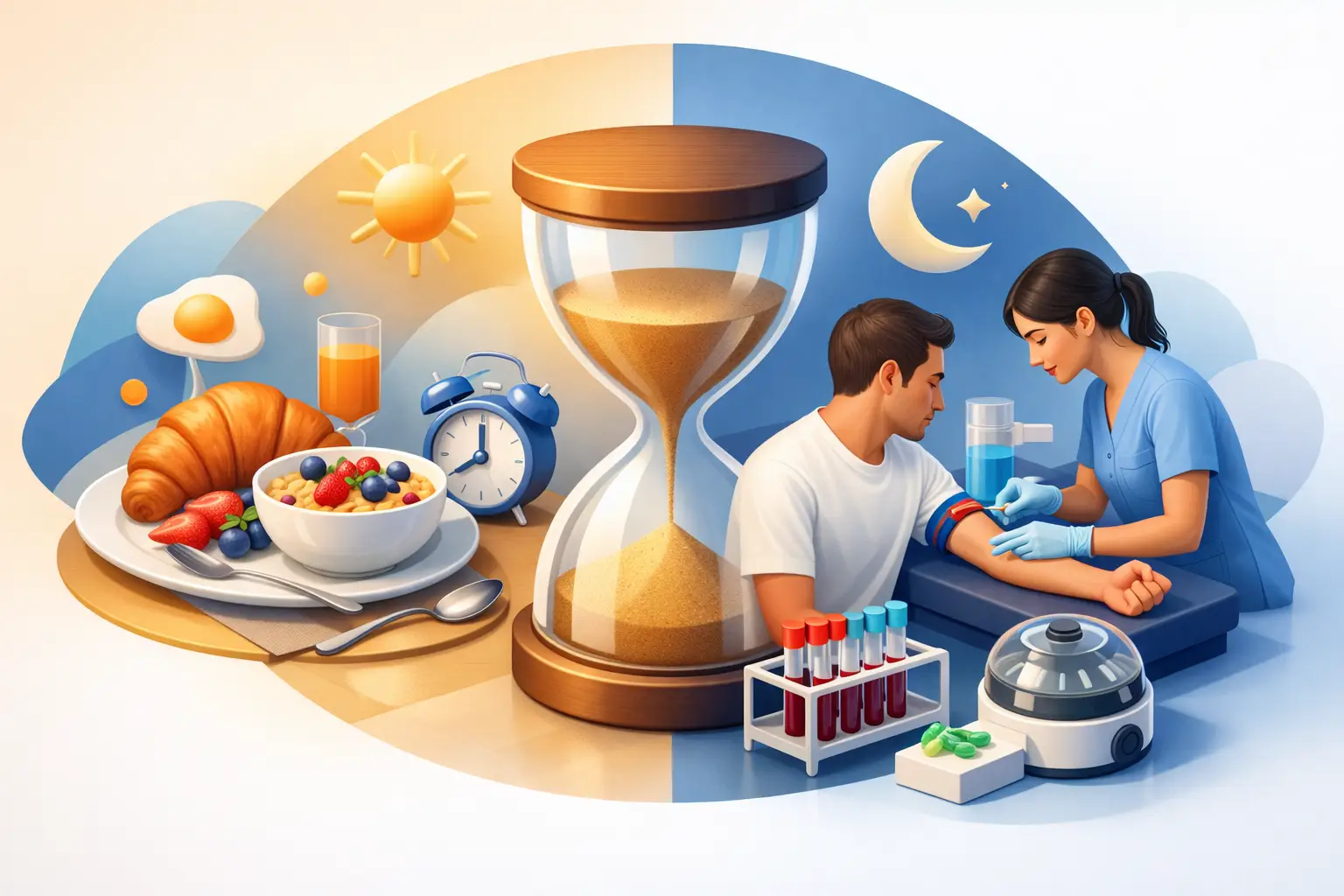
A blood test appointment can raise one practical question: “do I need to fast for blood test results to be accurate?” The answer is often no, but it depends entirely on the biomarkers being measured. Fasting when it is unnecessary can be inconvenient, while missing a fasting instruction can affect how a result is interpreted.
The most reliable approach is simple: follow the preparation guidance supplied for your specific test. If you are unsure, check before providing your sample rather than guessing. Clear preparation helps the laboratory assess your result in the right clinical context.
Do I need to fast for a blood test?
You may need to fast if your test measures substances that change noticeably after eating or drinking. Food is broken down and absorbed into the bloodstream, temporarily affecting markers such as glucose and triglycerides. A fasting sample gives a more consistent baseline for comparison with reference ranges and, where relevant, with previous results.
Many routine blood tests do not require fasting. Full blood count tests, thyroid function tests, many vitamin tests and a range of hormone markers can commonly be performed without avoiding food. However, requirements can vary between individual tests, panels and clinical circumstances.
A fasting period is usually around 8 to 12 hours, but this is not a universal rule. Your test instructions should state whether fasting is required and for how long. Do not extend the fasting period unnecessarily in the hope of getting a “better” result. Longer fasting can also influence some measurements and may leave you feeling unwell.
Blood tests that may require fasting
Fasting is most commonly requested for tests connected with blood sugar and fats in the blood. These may include fasting glucose, fasting insulin, some lipid profiles and triglycerides. Certain metabolic health assessments may also ask for a fasting sample so related markers can be considered together.
A clinician may request fasting for other tests depending on the reason for testing, your symptoms, medication and medical history. For example, a test used to investigate a particular metabolic concern may have different preparation requirements from a general wellbeing screen.
It is worth recognising that medical guidance changes over time. Some cholesterol tests can now be interpreted using a non-fasting sample, especially for routine assessment. However, triglycerides are more affected by recent meals, and a fasting lipid profile may still be appropriate in some situations. This is why the instructions for your chosen test take priority over general advice found online.
What fasting actually means
For most blood tests, fasting means having no food and no drinks containing calories during the stated period. This includes snacks, sweets, milk, fruit juice, smoothies, fizzy drinks, alcohol and coffee or tea with milk or sugar.
Plain water is normally allowed and encouraged. Staying hydrated can make blood collection easier, particularly for a venous draw. It can also support a good-quality finger-prick sample for eligible home tests. Drink water as you normally would, unless you have been given different clinical instructions.
Black tea or black coffee may be allowed for some tests, but not for others. Caffeine can affect certain results and can make fasting feel more difficult for some people. To avoid uncertainty, choose water only if your instructions say to fast.
Chewing gum, mints and supplements can also matter. Even sugar-free products may contain ingredients that are not suitable before certain fasting tests. Vitamins, minerals, herbal products and sports supplements may affect particular laboratory measurements or their interpretation. Tell the healthcare professional collecting your sample, or follow the instructions supplied with your home-testing kit, if you have taken them.
Preparing for your appointment or home sample
If you have been asked to fast, scheduling your sample early in the morning can make the process easier. You can usually eat your evening meal as normal, begin fasting at the time stated in your instructions, attend your appointment, then eat soon afterwards.
The day before testing, avoid making unusual changes simply to influence a result. A very intense workout, a large amount of alcohol or an unusually rich meal may affect some biomarkers. The aim is generally to capture a useful picture of your typical health, unless you have been given specific preparation advice.
Try to arrive relaxed and allow enough time. Stress, poor sleep, strenuous exercise and dehydration can all have short-term effects on some blood measurements. They do not necessarily make testing invalid, but they can provide useful context when results are reviewed.
For at-home blood collection, read the kit instructions before your planned collection time. Confirm whether fasting is needed, make sure you have drunk enough water, and collect and return the sample within the stated timeframe. A regulated collection device and careful sample handling support reliable laboratory analysis, but preparation remains an important part of the process.
Medicines, diabetes and fasting safely
Do not stop prescribed medication unless the clinician responsible for your care has told you to do so. Many medicines should be taken as usual, often with water, but some tests have specific timing requirements. If medication monitoring is involved, the time you last took a dose may be relevant to interpretation.
If you have diabetes, are pregnant, have a history of fainting, are underweight, or have a condition affected by missed meals, seek individual advice before fasting. Fasting can increase the risk of low blood glucose for people taking insulin or certain diabetes medicines. Your safety comes before preparation for a blood test.
If you begin to feel shaky, sweaty, confused, dizzy or unwell while fasting, treat this as a health concern rather than trying to continue for the test. Follow your usual medical advice for low blood glucose where applicable and contact an appropriate healthcare professional. The test can be rearranged if needed.
What if you accidentally eat or drink?
It happens. If you have eaten, had a milky coffee, drunk alcohol, or taken a supplement when your test required fasting, do not assume the sample is useless. Contact the testing provider or collection clinic before your appointment where possible. They can advise whether to proceed, reschedule or record the information alongside your sample.
Being open about what you have consumed is more helpful than trying to conceal it. Laboratory results are interpreted alongside relevant details, and an unexpected result may otherwise lead to unnecessary uncertainty or repeat testing.
Fasting is only one part of accurate testing
A high-quality blood testing journey involves more than avoiding breakfast. Correct patient identification, suitable sample collection, secure transport, validated laboratory methods and appropriate clinical review all contribute to a result that can be trusted.
MedTech Services Laboratory processes samples in a UKAS-accredited laboratory, with clear test-specific preparation guidance to help customers collect samples correctly. Whether you choose clinic collection or an eligible at-home option, checking your instructions before collection is one of the simplest ways to support a smooth experience.
Common questions about fasting blood tests
Can I drink water before a fasting blood test?
Usually, yes. Plain water is generally permitted and can help you stay hydrated. Avoid adding squash, flavourings or electrolyte products unless your instructions specifically allow them.
Can I brush my teeth while fasting?
Brushing your teeth is normally fine. Try not to swallow toothpaste or mouthwash, particularly if your instructions require a strict fast.
Can I exercise before my blood test?
Gentle everyday movement is usually fine, but avoid strenuous exercise immediately before testing unless instructed otherwise. Hard training can temporarily affect markers including glucose, enzymes and some hormones.
What should I do after a fasting blood test?
Eat and drink as soon as it is appropriate to do so. Bringing a snack to a clinic appointment can be sensible, especially if you have fasted overnight or are prone to feeling light-headed.
The best preparation is not complicated: check the instructions for your individual test, drink plain water if permitted, and ask for advice when medication or a health condition makes fasting uncertain. A few minutes of planning can make your blood test more comfortable and your results easier to interpret.