
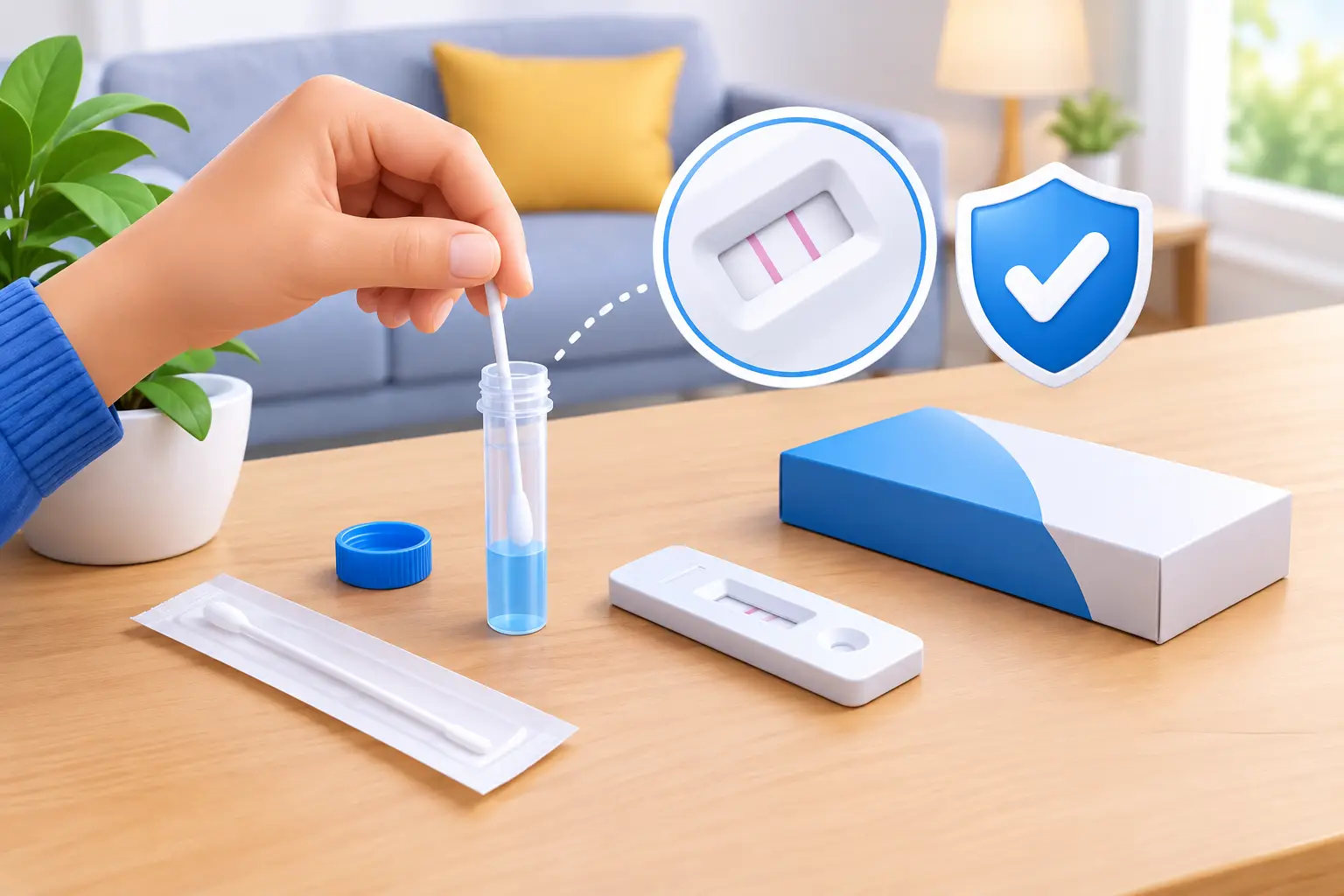
A home blood test is only useful when the result reflects your health as reliably as possible. Home sample accuracy depends on more than the analyser used in the laboratory. It starts with choosing a suitable test, then collecting, protecting and returning the sample correctly.
For many blood markers, a well-collected finger-prick sample can provide a practical, private alternative to a clinic appointment. The key is understanding where accuracy comes from, what can affect it, and when professional sample collection may be the better option.
What home sample accuracy really means
Accuracy is not a single step or a single promise. In laboratory testing, it describes how closely a result reflects the level of a marker in the sample provided. For a home test, that relies on three connected stages: the sample being collected properly, the sample remaining suitable during transport, and the laboratory analysing it under controlled conditions.
The laboratory stage matters, but so does the period before the sample arrives. This is sometimes called the pre-analytical stage. A sample can be affected by insufficient blood volume, contamination, delays in return, incorrect storage or collection at a time that does not match the test instructions.
That does not make home testing unreliable. It means the collection process must be designed around the biomarkers being measured, with clear instructions, an appropriate collection device and a laboratory that checks whether the sample is suitable for analysis.
The factors that make a home sample reliable
A collection method suited to the test
Not every blood test is equally suited to a finger-prick collection. Some biomarkers can be measured reliably from a small capillary blood sample, while others may require a venous blood draw from the arm, a larger sample volume or faster processing.
A responsible provider should match the collection method to the test rather than treating home collection as the right answer for every request. If a particular test requires a clinic appointment or a professional home visit, that is a clinical requirement, not an inconvenience to be overlooked.
MedTech Services Laboratory uses an MHRA-regulated in vitro diagnostic sample-collection device for suitable home blood tests. Its sample-preservation technology is designed to help protect samples during transport to the laboratory, supporting analysis across a broad range of available biomarkers.
Correct preparation before collection
Your preparation can influence certain results. Tests involving glucose, insulin or blood lipids may require fasting, for example. Hormone measurements can also be time-sensitive, and some tests have specific guidance about medicines, supplements, exercise, alcohol or the point in a menstrual cycle when the sample should be taken.
Always follow the instructions supplied with your chosen test rather than applying general advice from another test or a previous appointment. Do not stop prescribed medication unless a clinician has advised you to do so. If you are unsure whether a medicine or supplement could affect the result, it is sensible to check before collecting your sample.
Hydration is often overlooked. Being well hydrated can make it easier to produce an adequate finger-prick sample. This does not mean drinking excessive amounts of water immediately before collection, but avoiding collection when you are dehydrated, unwell or recovering from strenuous exercise unless the test guidance says otherwise.
A good finger-prick technique
Small details make a meaningful difference. Warm hands improve circulation, so washing them in warm water and drying them thoroughly before collection can help. Hands should be clean and completely dry, as moisture, food residue, creams or alcohol-based products may compromise the sample.
Use the finger and lancet position shown in the instructions. Let the blood flow naturally after the finger-prick, rather than squeezing aggressively. Excessive squeezing may dilute the sample with tissue fluid or make collection more difficult. If blood flow slows, gently massage from the base of the finger towards the tip.
Fill the collection device to the required level and cap it securely. An underfilled sample may not contain enough material for all requested markers. Conversely, transferring blood incorrectly or touching collection surfaces can affect sample quality. Take your time, work on a clean surface and use the contents of the kit exactly as directed.
Time and temperature during return
A sample does not benefit from sitting on a kitchen counter for two days. Return timing is a major part of home sample accuracy. Collect your sample on the day and at the time recommended, package it promptly and use the specified return method.
Avoid posting immediately before a weekend or bank holiday unless the kit instructions confirm this is appropriate. Delayed transit can reduce the stability of some analytes, even where preservation technology is used. Posting early in the week and early in the day usually gives the sample the best chance of reaching the laboratory without unnecessary delay.
Keep the kit away from extreme heat, direct sunlight and very cold conditions before posting. If you have concerns about a significant delay in transit, contact the provider rather than assuming the sample will remain suitable.
What happens when the sample reaches the laboratory
A reliable home testing service does not simply analyse every tube that arrives. On receipt, the laboratory checks sample identity, packaging and suitability. Depending on the test and collection system, this may include checking the sample volume, condition and whether the sample shows signs that could interfere with the requested analysis.
At a UKAS-accredited laboratory, quality processes support the testing pathway from sample receipt through to reporting. Samples that meet acceptance criteria are processed using validated laboratory methods and quality controls. At MedTech Services Laboratory, most received samples are processed within four hours, helping to support efficient turnaround for suitable tests.
Sometimes a sample cannot be analysed, or only some requested markers can be reported. This may happen because there was not enough blood, the sample was delayed, or the sample condition did not meet the requirements of a particular assay. While frustrating, a rejection is a safeguard. Reporting a result from an unsuitable sample would be less helpful than requesting a new one.
When a home test may not be the best choice
Home collection offers flexibility, but it is not always the preferred route. If you struggle to obtain enough blood from a finger-prick, feel faint around blood, have poor circulation, or need a test requiring venous sampling, professional collection may be more appropriate.
A clinic-based blood draw can also be useful when a clinician needs a specific collection time, when several tubes are required, or when results need to be compared closely with previous venous samples. For ongoing monitoring, consistency matters. Using the same collection method, time of day and preparation routine where possible can make trends easier to interpret.
Home tests are also not a substitute for urgent medical care. Seek immediate medical advice for symptoms such as severe chest pain, sudden weakness, significant breathlessness, heavy bleeding or thoughts of self-harm. A postal sample should never delay urgent assessment.
How to give your sample the best chance of success
Before opening the kit, read the instructions from start to finish and check the expiry date. Choose a collection day that allows prompt return. Prepare a clean, well-lit area, wash and dry your hands, and have all components within reach.
Follow any fasting or timing instructions precisely. Record requested information accurately, including collection date and time where applicable. Package the sample as directed, activate any required registration step and post it promptly using the return option provided.
If your sample is rejected, do not assume you have done something wrong. Finger-prick collection can be affected by cold hands, low blood flow or circumstances outside your control. Use the feedback provided, and consider a professional collection option if you would prefer support next time.
The practical value of home testing is not just convenience. It is the ability to collect a suitable sample at a time that fits your life, while still benefiting from disciplined laboratory processes. Following the kit guidance carefully gives your result the strongest possible foundation and helps you make informed next steps with confidence.