
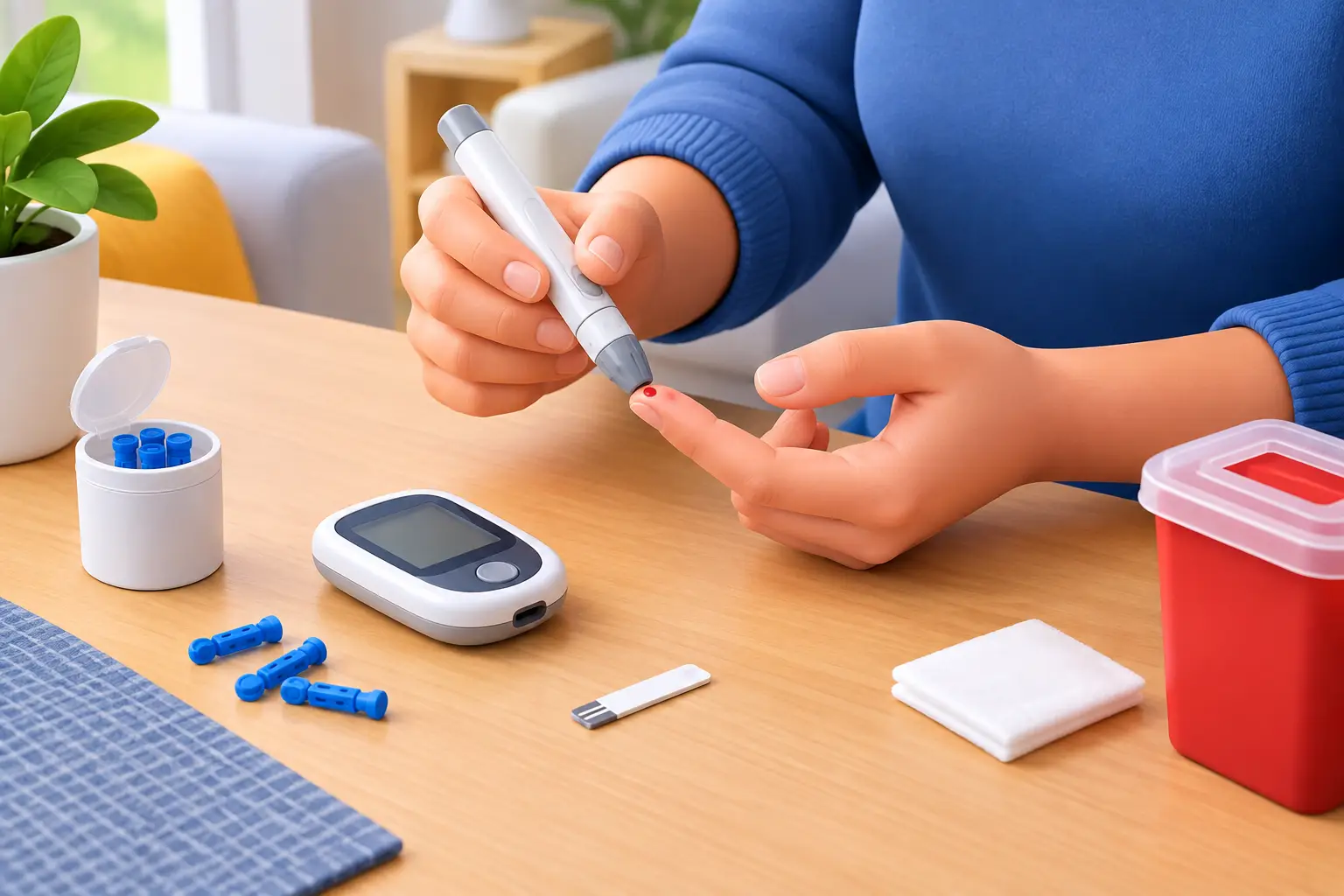
A home blood test should fit around your day, not require you to become an expert in phlebotomy. Collecting fingerprick samples safely is a straightforward process when you use the supplied equipment, follow the collection instructions for your specific test and allow enough time to prepare. A good-quality sample also helps the laboratory complete your analysis without avoidable delays or the need for a repeat collection.
Fingerprick testing is designed to make access to laboratory blood testing more convenient. It may be suitable for a broad range of blood health, hormone, thyroid, metabolic and nutritional markers, depending on the test ordered. However, the quality of the result begins before your sample reaches the laboratory. Careful preparation, clean technique and prompt return all matter.
Prepare before collecting your sample
Read the instruction leaflet in full before opening the collection kit. Different tests can have different requirements for fasting, collection time, tube filling and return. For example, some hormone or metabolic tests may need to be taken at a particular time of day, while fasting tests may require you to avoid food for a stated period. Water is usually permitted unless your instructions say otherwise.
Choose a clean, well-lit surface and set aside enough uninterrupted time. Rushing is one of the most common reasons people find a fingerprick collection difficult. Lay out the kit contents, including the collection tube or card, lancet, cleansing wipe, plaster, sample bag and return packaging. Check the expiry date on the kit and make sure the collection tube is not damaged.
Wash your hands thoroughly with warm water and soap, then dry them completely. Warm hands support blood flow, while dry hands prevent water from diluting the sample. If your hands are cold, warm them gently first by holding a warm drink, washing in comfortably warm water or swinging your arms at your sides for a minute or two. Do not use very hot water or a heating source directly on your skin.
Hydration can also make collection easier. Drinking water in the hours before your test may help, but avoid treating it as a substitute for the preparation instructions supplied with your kit. If you feel faint around needles or blood, collect your sample while seated and ask another adult to be nearby if possible.
Collecting fingerprick samples safely: the technique
Use the side of the tip of your middle or ring finger on your non-dominant hand, unless your kit advises otherwise. These fingers are generally less sensitive than the thumb or index finger and are usually easier to use for collection. Avoid skin that is sore, broken, swollen, heavily callused or infected.
Clean the chosen fingertip with the supplied wipe and allow it to air dry fully. Do not blow on it, wipe it with a towel or touch the site once cleaned. Alcohol left on the skin can affect the blood drop and may sting when the lancet is used.
Remove the lancet cap only when you are ready. Press the lancet firmly against the side of your fingertip and activate it according to the device instructions. The lancet is single-use. Never reuse it, share it with another person or try to recap it after use.
Wipe away the first drop of blood if your instructions tell you to do so. Then allow a new drop to form naturally. Keep your hand below heart level and gently massage from the base of the finger towards the fingertip. The aim is to encourage blood flow, not force it out. Heavy squeezing can introduce tissue fluid into the sample and may affect its quality.
Hold the collection tube or device beneath the blood drop, taking care not to touch the collection surface directly to your skin. Fill it to the indicated line where one is shown. If your kit requires more than one drop, continue with gentle massage and pauses to let blood reform. You may use another permitted finger if necessary, following the same cleaning and collection process.
Once the sample is collected, apply the plaster supplied. Light pressure for a few minutes is usually enough to stop minor bleeding. Keep the plaster on until the site has sealed, particularly if you are doing household tasks soon afterwards.
Handle, label and pack the sample correctly
A properly collected sample still needs to be packaged correctly. Secure the cap or close the collection device exactly as instructed. If the tube needs mixing, invert it gently for the number of times stated in the leaflet. Do not shake it vigorously, as this can damage blood cells and may make the sample unsuitable for analysis.
Complete any required label or form clearly, using the details requested. This is essential for sample identification and for matching the result to the right person. Check that the date and time of collection are accurate, especially where timing is relevant to interpretation.
Place the sample into the provided protective packaging, followed by the sample bag and return pack. Use only the packaging supplied with the kit. It is designed to help protect the sample in transit and to support safe handling when it arrives at the laboratory.
Post or arrange the return of your sample as soon as your instructions advise. Avoid collecting immediately before a weekend, bank holiday or another period when your return service may be delayed, unless your kit specifically provides for this. Sample stability depends on the test, collection device and transport method. Returning it promptly gives the laboratory the best opportunity to process a suitable sample.
At MedTech Services Laboratory, home collection kits use an MHRA-regulated IVD sample-collection device with sample-preservation technology to support transport and laboratory processing. Once received, samples are handled through established laboratory processes, with analysis undertaken by a UKAS-accredited laboratory.
Avoid common collection problems
The most frequent challenge is slow blood flow. Cold hands, dehydration, anxiety and a very shallow finger position can all contribute. Pause, warm your hands and gently massage from the palm towards the fingertip before trying again with a new lancet on a different permitted finger. Do not repeatedly prick the same site.
Another issue is an underfilled tube. If the sample does not reach the fill line, the laboratory may not have enough blood to complete every marker requested. Follow the instructions on whether a second tube, another finger or a replacement kit is needed. Adding water or any other liquid to a sample is never appropriate.
Blood that has clotted, leaked or been exposed to excessive delay may also be unsuitable. That is why it is worth checking the cap is secure, the sample is in its protective packaging and the return instructions are followed before you leave home or hand over the parcel.
When to choose professional sample collection instead
Fingerprick collection is not the best option for every person or every test. Consider a clinic-based or professional collection service if you have difficulty obtaining a sample, have poor circulation, experience severe hand tremors, or are concerned about self-collection. A venous blood draw may also be required for particular tests or where a larger volume of blood is needed.
Take extra care if you use anticoagulant medication, have a bleeding disorder or have been advised by a healthcare professional to avoid skin punctures. In these situations, seek clinical advice before collecting a sample. If bleeding does not stop after firm pressure, or you feel unwell, faint or increasingly unwell during collection, stop and seek appropriate medical assistance.
Home testing can provide useful information, but it does not replace urgent medical care. Symptoms such as chest pain, severe breathlessness, sudden weakness, heavy bleeding or signs of a serious allergic reaction need prompt assessment through the appropriate urgent care route, rather than a postal blood test.
A small routine that protects your result
The practical details matter: warm, clean and dry hands; a single-use lancet; gentle pressure rather than squeezing; accurate labelling; and a prompt return. Build in ten quiet minutes, read your kit before you start and choose a collection day that allows your sample to travel without unnecessary delay. That preparation gives your blood test the strongest possible start and helps you get clear, reliable information to support your next health decision.