
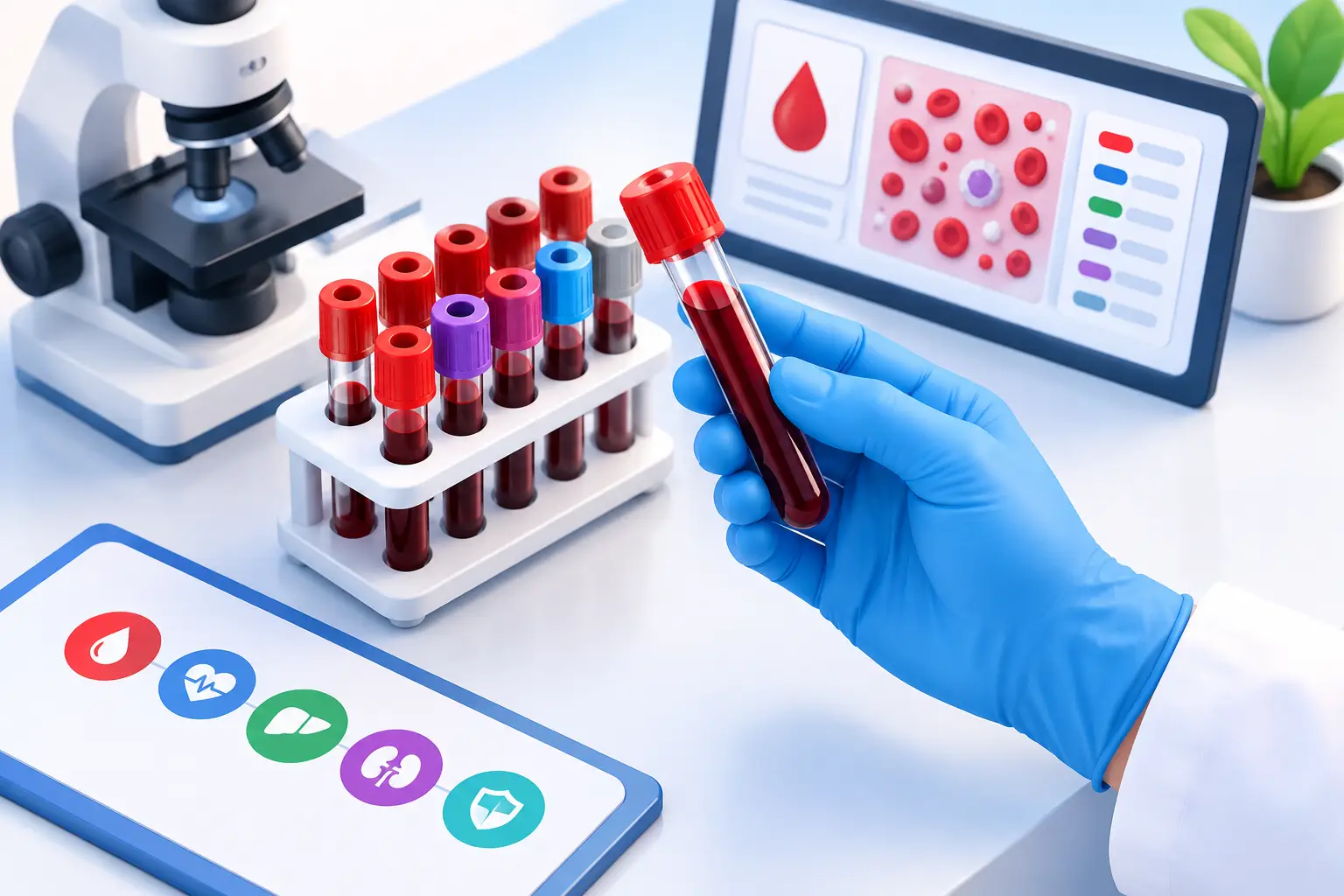
A single result can be useful, but health questions rarely fit into one number. Blood panels bring related biomarkers together, giving a broader view of an area such as thyroid function, iron status, hormones or metabolic health. This can make testing more efficient, particularly when you have symptoms to discuss, a known condition to monitor or a specific health goal in mind.
The right panel is not necessarily the largest one. It is the one that answers a sensible clinical question, uses an appropriate sample type and gives you results you can understand and act on with suitable professional support.
What are blood panels?
A blood panel is a group of laboratory tests measured from one blood sample. The individual markers are selected because they relate to the same body system, symptom pattern or health concern. Rather than ordering each marker separately, a panel can provide context by showing how results sit alongside one another.
For example, an anaemia panel may assess iron stores and markers involved in red blood cell production. A thyroid panel may include thyroid-stimulating hormone and thyroid hormones. A metabolic panel may look at blood sugar control, cholesterol and other markers associated with cardiometabolic health.
This does not mean a panel can diagnose every cause of a symptom. Blood results are one part of the clinical picture. Your medical history, medicines, lifestyle, family history and, where needed, examination or further investigations all matter. A result outside the reference range may need follow-up, while a result within range does not always rule out a health concern.
When a blood panel can be a practical choice
Panels are often useful when there is a clear reason to test several related markers. Someone experiencing ongoing tiredness, for instance, may want to investigate iron status, vitamin levels, thyroid function and other relevant markers. The most suitable approach depends on the nature and duration of symptoms, as well as any existing medical conditions.
They can also support planned monitoring. If you have previously been advised to keep an eye on a marker, repeat testing at appropriate intervals can help you and your clinician understand change over time. Consistency matters here: where possible, use the same collection method, test at a similar time of day and follow preparation instructions carefully.
For health-conscious adults without symptoms, a focused health check may offer a useful baseline. This can be valuable before making changes to diet, training or supplements, or simply as part of a wider conversation about preventative health. However, broad screening is not always the best first choice for everyone. Testing very large numbers of markers without a clear purpose can produce borderline or unexpected findings that need explanation and may lead to further testing.
Common types of blood panels
The panel that is right for you depends on the question you want answered. MedTech Services Laboratory offers tests across routine blood health, hormones, endocrine function, metabolic markers and more, helping customers choose a route that fits their needs.
General health and wellbeing panels
These panels commonly assess areas such as liver and kidney function, cholesterol, blood sugar and full blood count markers. They can provide a broad overview of routine blood health, but they are not a substitute for a GP assessment if you feel unwell or have concerning symptoms.
A full blood count, for example, measures components of your blood including red cells, white cells and platelets. It may help identify patterns that merit clinical discussion, but an abnormal result has several possible causes. Interpretation should always consider the wider picture.
Iron, vitamin and anaemia panels
Low energy, breathlessness on exertion, headaches and poor concentration can have many causes. Iron deficiency is one possibility, but it is not the only one. An iron or anaemia-focused panel can include ferritin, iron-related measures, vitamin B12 and folate, depending on the test selected.
Ferritin is commonly used to assess iron stores, although it can be influenced by inflammation and other factors. That is why a panel can be more informative than one measurement alone, and why self-treating with iron supplements without appropriate advice is not always sensible.
Thyroid and hormone panels
Thyroid hormones influence energy, temperature regulation, heart rate and metabolism. A thyroid panel is often considered when symptoms such as persistent fatigue, unexplained weight change, palpitations or changes in mood are present. These symptoms are non-specific, so results should be reviewed in context.
Hormone testing may support investigations into menstrual changes, fertility questions, libido, menopause-related concerns or testosterone levels. Timing can be particularly important. Some hormones vary during the menstrual cycle or throughout the day, and certain medicines can affect results. Check the instructions before collecting your sample and share relevant information during clinical review.
Metabolic and cardiovascular panels
Metabolic health panels may assess glucose, HbA1c, insulin and lipid markers such as cholesterol and triglycerides. They can be helpful for people monitoring known risks, reviewing lifestyle changes or seeking a clearer understanding of their cardiometabolic health.
Preparation is especially relevant for some tests in this category. You may be asked to fast, avoid strenuous exercise or arrange collection at a particular time. Follow the test guidance exactly, as food, alcohol, supplements and recent exercise can affect certain results.
Choosing between home collection and clinic collection
Convenience should not come at the expense of sample quality. The best collection option depends on the test, the markers being measured and your confidence with collecting a sample.
At-home finger-prick collection can be a practical option for many tests. It allows you to collect your sample privately, without arranging an appointment, then return it using the instructions provided. MedTech Services Laboratory uses an MHRA-regulated IVD sample-collection device and sample-preservation technology designed to support reliable transport and laboratory processing.
Some panels require a venous blood sample, collected from a vein by a trained professional. Clinic-based collection may be more suitable when a larger sample volume is needed, when fasting is required, or when you would prefer support with the collection process. If you have previously found finger-prick sampling difficult, choosing professional collection may help avoid an insufficient sample and the need to repeat the test.
Whichever route you choose, make sure the sample is labelled correctly, collected within the stated timeframe and returned promptly. A well-collected sample supports accurate laboratory analysis.
How to prepare for more meaningful results
Each test has its own requirements, so the instructions supplied with your chosen panel should take priority. In general, tell the provider about prescription medicines and supplements, especially biotin, which can interfere with some laboratory tests. Do not stop prescribed medication unless a healthcare professional advises you to do so.
Try to collect your sample when you are not acutely unwell unless the purpose of the test is to investigate that illness. Temporary infection, dehydration, poor sleep, heavy exercise and alcohol can influence selected markers. If you are monitoring a result over time, note any significant changes in medication, diet, training or health status that could help explain a difference.
Understanding your results without jumping to conclusions
Laboratory reports usually show your result, the unit of measurement and a reference range. A reference range describes results commonly seen in a defined healthy population. It is not a universal dividing line between being well and being unwell.
Results can fall outside a reference range for temporary, harmless or clinically relevant reasons. Equally, a result within range may still need attention if symptoms persist. Look for patterns across the panel rather than focusing on one flagged number, and use doctor-reviewed results or speak with a qualified healthcare professional when this is available.
Seek urgent medical advice rather than waiting for an online test if you have severe chest pain, difficulty breathing, signs of a stroke, heavy bleeding, collapse, thoughts of self-harm or rapidly worsening symptoms. Blood testing is valuable, but it is not designed to replace urgent care.
A considered next step for your health
A well-chosen blood panel can turn a vague concern into a more informed conversation about your health. Choose a test that matches your reason for testing, follow the collection guidance closely and give the results the context they deserve. If something does not feel right, use your results as a starting point for appropriate clinical advice, not as the final word.