
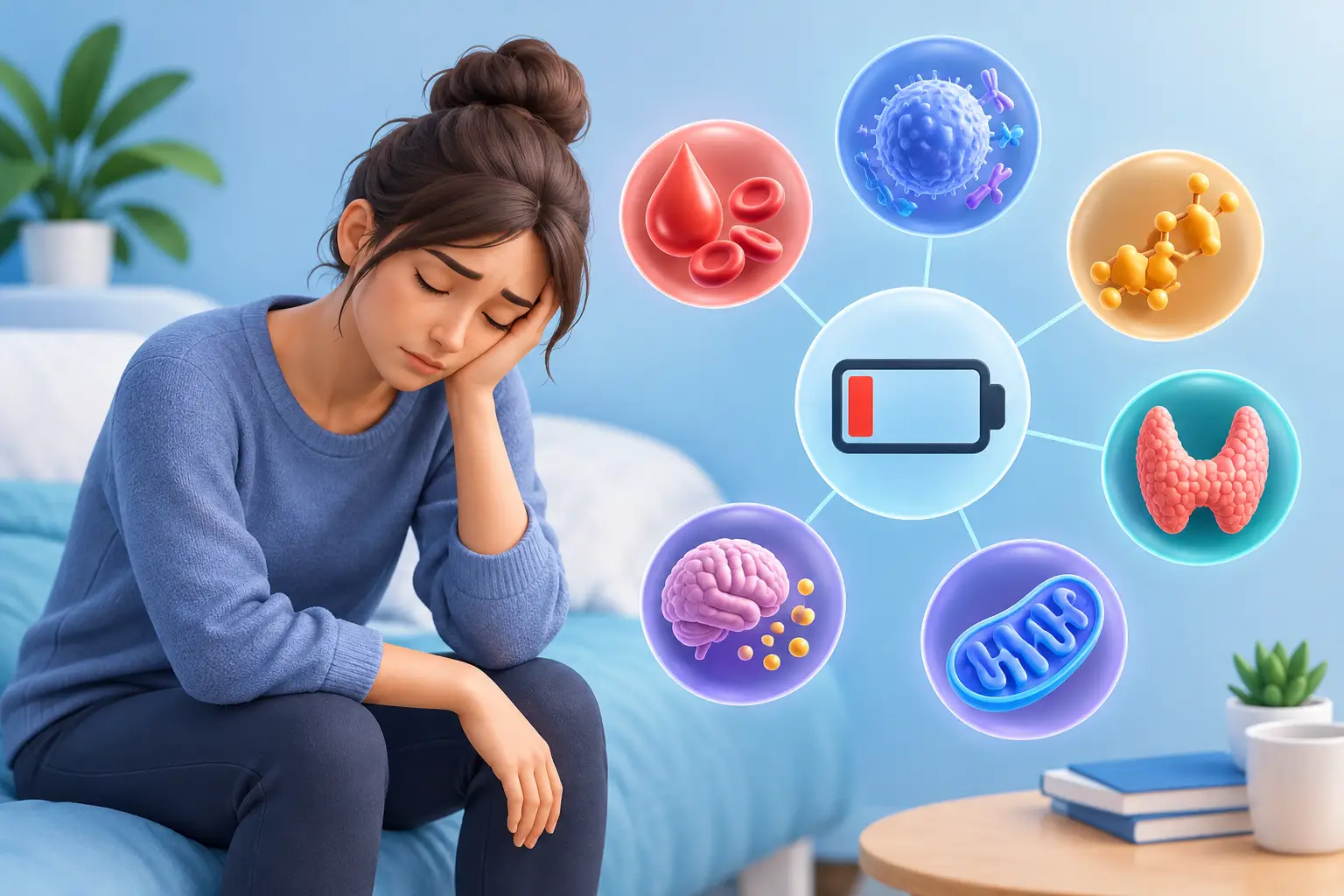
Feeling tired after a short night, a demanding week or an illness is common. Fatigue that lasts for weeks, affects concentration, changes exercise tolerance or makes normal daily tasks feel difficult deserves a closer look. Biomarkers linked to persistent fatigue cannot provide a diagnosis on their own, but blood testing can help identify patterns worth discussing with a healthcare professional.
Persistent fatigue has many possible causes. Nutrient deficiencies, thyroid disorders, blood sugar changes, inflammation, hormonal factors, poor sleep, stress, medication effects and ongoing health conditions can all contribute. A considered blood test can move the conversation beyond guesswork, showing whether there are measurable factors that may need attention.
Why fatigue needs a targeted testing approach
Fatigue is a symptom rather than a single condition. For one person, it may feel like physical weakness or breathlessness on stairs. For another, it may be a loss of mental clarity, low motivation or an inability to recover after exercise. The most useful biomarkers depend on the symptoms, medical history, diet, medications, age and sex.
This is why a broad but relevant assessment is often more informative than testing one marker in isolation. For example, a low ferritin result may point towards depleted iron stores, but a full blood count helps show whether iron deficiency has progressed to anaemia. Similarly, thyroid results need to be interpreted together rather than relying on one hormone measurement.
Blood results are also a snapshot. A result within a laboratory reference range does not always explain how someone feels, while an out-of-range result may require repeat testing, clinical context or further investigation. Testing is most valuable when it supports an informed next step.
Core biomarkers linked to persistent fatigue
Full blood count and iron status
A full blood count, often abbreviated to FBC, measures red blood cells, haemoglobin and related indices. Haemoglobin carries oxygen around the body, so anaemia can contribute to tiredness, reduced stamina, headaches, dizziness, paleness or breathlessness.
Iron deficiency is a common cause of anaemia, particularly in people with heavy periods, restricted diets, pregnancy, digestive conditions or a history of blood loss. Ferritin is a key marker of iron stores. Iron, transferrin or total iron-binding capacity may also be used to build a clearer picture.
Ferritin can rise during inflammation or infection, however, so it should not always be interpreted as a simple measure of iron stores. A healthcare professional may consider the full blood count, iron profile and inflammatory markers together.
Vitamin B12 and folate
Vitamin B12 and folate support normal red blood cell formation and neurological function. Low levels can be associated with fatigue and, in some cases, pins and needles, mouth ulcers, memory concerns or changes in mood.
B12 deficiency may occur with a vegan diet unless B12 is supplemented, but it can also result from reduced absorption, certain medicines or autoimmune conditions affecting the stomach. Folate status can be influenced by diet, alcohol intake, increased requirements and some medicines. These results should be assessed alongside the full blood count and a person’s symptoms.
Thyroid function
The thyroid helps regulate energy use throughout the body. Underactive thyroid function can be associated with fatigue, feeling cold, weight change, constipation, dry skin, low mood and slower thinking, although symptoms vary considerably.
Thyroid-stimulating hormone, or TSH, is usually the starting point. Free thyroxine, known as free T4, provides further context. In selected circumstances, additional thyroid tests or antibody testing may be clinically appropriate. Thyroid hormone supplements should never be started, stopped or adjusted solely on the basis of a single result without medical advice.
Glucose and longer-term blood sugar
Blood sugar changes can affect energy, concentration and appetite. Fasting glucose reflects blood glucose at the time of collection, while HbA1c estimates average glucose levels over roughly the previous two to three months.
Raised HbA1c may warrant assessment for prediabetes or diabetes. Low energy after meals can have several explanations and does not automatically mean there is a glucose problem, but glucose markers can be a useful part of a wider assessment, especially where there is thirst, frequent urination, unexplained weight change or a family history of diabetes.
Inflammation and general health markers
C-reactive protein, or CRP, is a commonly used marker of inflammation. It may rise with infection, injury, inflammatory conditions and many other causes. CRP is non-specific, meaning it cannot identify the source of inflammation by itself, but it can provide helpful context when symptoms persist.
Kidney and liver function tests may also be considered. The kidneys and liver have essential roles in filtering waste products, balancing fluids, processing medicines and supporting metabolism. Abnormal results need appropriate clinical follow-up and are not something to self-manage with supplements.
Vitamin D and calcium-related markers
Low vitamin D is common in the UK, particularly during periods of limited sun exposure. It may be associated with muscle aches, bone discomfort or weakness, although fatigue is non-specific and cannot be attributed to vitamin D alone.
Testing can identify a low level and help guide a sensible discussion about supplementation. Taking high doses without advice is not risk-free, as excessive vitamin D can alter calcium levels. The right approach depends on the result, current supplements and individual health circumstances.
Hormonal testing when symptoms suggest it
Sex hormones, cortisol and other endocrine markers are not routine answers to every case of fatigue. They can be valuable when fatigue occurs alongside specific symptoms, such as changes to menstrual cycles, reduced libido, erectile difficulties, hot flushes, unexpected weight changes or features suggesting an adrenal or pituitary disorder.
Timing matters. Some hormone measurements vary by time of day, menstrual cycle stage, medication use and recent illness. Choosing the right test at the right time improves the usefulness of the result and reduces the risk of misleading conclusions.
What a result can and cannot tell you
A blood test may identify a treatable deficiency, an abnormal thyroid pattern, changes in glucose control or evidence that further assessment is needed. It cannot measure every cause of fatigue. Sleep apnoea, anxiety, depression, post-viral symptoms, workload, alcohol intake, chronic pain and medication side effects may not be apparent from routine blood markers.
It is also possible for results to be normal while fatigue remains real and disruptive. In that situation, normal testing can still be useful because it helps narrow the next clinical questions. Keeping a brief record of sleep, diet, activity, symptoms and any patterns around work, exercise or menstrual cycles can make a consultation more productive.
Choosing a practical fatigue blood test
For unexplained tiredness, a panel that includes a full blood count, iron status, B12, folate, thyroid function, vitamin D, glucose or HbA1c, and kidney and liver markers may provide a useful starting point. CRP can add context where inflammation is a consideration. The most appropriate combination will depend on your symptoms and medical background.
Before testing, check whether fasting is required and follow the collection instructions carefully. Tell the reviewing clinician about prescription medicines, over-the-counter products and supplements, particularly biotin, which can interfere with some laboratory tests. Avoid starting high-dose iron or vitamins immediately before testing unless a clinician has advised it, as this may affect interpretation.
A professionally processed test provides clearer reassurance than unvalidated wellness claims. MedTech Services Laboratory uses UKAS-accredited laboratory analysis and regulated sample-collection processes, with secure digital results and clinical review where applicable. Home collection can be a convenient option, but some tests and circumstances may be better suited to a clinic-based sample collection.
When to seek medical advice promptly
Do not rely on routine testing alone if fatigue is severe, sudden or worsening. Seek urgent medical advice for fatigue with chest pain, severe shortness of breath, fainting, black or bloody stools, confusion, new weakness, significant unexplained weight loss, persistent fever or thoughts of self-harm.
If fatigue has lasted more than a few weeks, is affecting work or daily life, or comes with other unexplained symptoms, arrange a discussion with a GP or qualified healthcare professional. Blood testing can provide useful evidence, but the best next step is always guided by the whole picture – your results, symptoms and health history.