
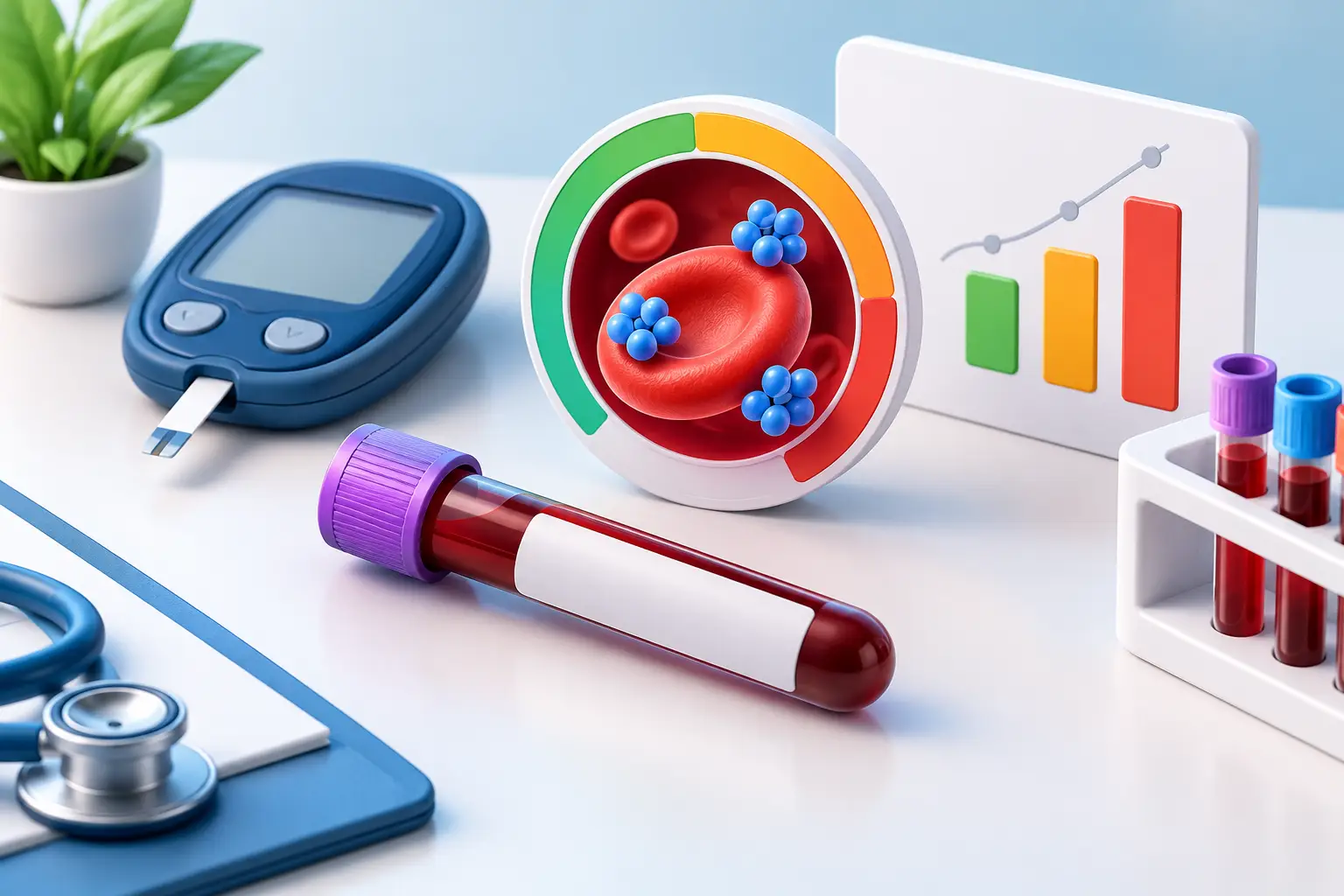
A single HbA1c result can turn a routine blood test into a worrying question: is my blood sugar too high? Understanding HbA1c test meaning puts that number into context. It shows your average blood glucose level over the previous two to three months, rather than the level at one moment on the day of testing.
This makes HbA1c a useful marker for checking for diabetes, identifying an increased risk of developing type 2 diabetes, and monitoring glucose management when diabetes has already been diagnosed. It is not a judgement on your diet or lifestyle. It is one clinical measurement that should be considered alongside your symptoms, medical history and, where relevant, other test results.
What does an HbA1c test measure?
Haemoglobin is a protein in red blood cells that carries oxygen around your body. When glucose circulates in the blood, some of it attaches to haemoglobin. This is known as glycated haemoglobin, or HbA1c.
Red blood cells usually live for around 120 days. The more glucose that has been present in your blood during that period, the higher the proportion of haemoglobin with glucose attached. HbA1c therefore provides a longer-term picture than a fasting glucose test, which reflects blood glucose at the time your sample is taken.
For most people, fasting is not required for an HbA1c test. That can make it a practical option for busy schedules and for people who want to check a key metabolic health marker without arranging an early-morning appointment. However, follow the preparation instructions supplied with your chosen test, particularly if HbA1c forms part of a wider blood panel.
HbA1c test meaning: understanding UK result ranges
In the UK, HbA1c is commonly reported in mmol/mol. Some reports may also show a percentage, especially if you have seen results from overseas. The two formats describe the same measurement but use different scales.
For adults who are not known to have diabetes, commonly used diagnostic ranges are:
- Below 42 mmol/mol: a result not in the range used to diagnose prediabetes or diabetes.
- 42 to 47 mmol/mol: increased risk of developing type 2 diabetes, sometimes described as non-diabetic hyperglycaemia or prediabetes.
- 48 mmol/mol or above: a result in the range used to diagnose diabetes.
A result of 48 mmol/mol or above does not always mean a diagnosis is confirmed from one test alone. If you do not have clear symptoms of diabetes, a clinician will usually arrange a repeat HbA1c test or another diagnostic blood glucose test on a separate day. This helps ensure the result is reliable and interpreted correctly.
If you already have diabetes, your target HbA1c is individual. Many adults are given a target around 48 to 58 mmol/mol, but the appropriate level depends on the type of diabetes, treatment, risk of low blood glucose, age, pregnancy plans and other health conditions. A lower number is not automatically better if it is achieved alongside frequent hypos or is unsuitable for your circumstances.
What a high HbA1c result may mean
An HbA1c in the increased-risk range suggests that blood glucose has been higher than ideal over recent months. It does not confirm that you will develop type 2 diabetes, but it is a useful opportunity to discuss practical changes with a healthcare professional. Depending on your situation, these may include food choices, physical activity, weight management, sleep, medication review and follow-up testing.
An HbA1c in the diabetes range needs timely clinical follow-up. Symptoms that can occur with raised blood glucose include increased thirst, passing urine more often, unexplained weight loss, tiredness, recurrent thrush and blurred vision. Some people have no noticeable symptoms at all, which is why testing can be valuable.
Do not attempt to interpret a high result in isolation or make abrupt changes to prescribed medication. A qualified clinician can assess whether further tests are needed, discuss potential causes and agree a suitable next step.
Why HbA1c is not right for every situation
HbA1c is highly useful, but it is not a direct reading of today’s blood glucose and it has limitations. Anything that changes the lifespan, production or structure of red blood cells can affect the result.
Recent significant blood loss, a blood transfusion, some types of anaemia, kidney disease and certain haemoglobin variants may make HbA1c less reliable. Iron deficiency anaemia can sometimes raise HbA1c independently of average glucose, while conditions that shorten red blood cell survival can produce a lower result than expected. Pregnancy is another situation where different testing approaches may be preferred for diagnosing gestational diabetes.
Ethnicity, medication and acute illness can also matter in the wider clinical picture. Tell the clinician reviewing your result about any known blood disorder, recent hospital treatment, pregnancy, major bleeding or relevant medication. They may recommend a fasting glucose test, an oral glucose tolerance test, home glucose monitoring or another assessment instead.
When should you consider an HbA1c test?
An HbA1c test may be appropriate if you have symptoms associated with raised blood glucose, a family history of type 2 diabetes, or risk factors such as overweight, high blood pressure, polycystic ovary syndrome or a history of gestational diabetes. It can also be useful as part of a broader health check, particularly when combined with markers such as cholesterol and liver function where clinically appropriate.
If you have diagnosed diabetes, testing frequency is usually guided by your care team. It may be checked every three to six months when treatment is being started or adjusted, and less often once results are stable. Your individual plan should take priority over general testing advice.
For people using a private testing service, consider what you will do with the result before ordering. A clear report is helpful, but a result outside the expected range should lead to appropriate clinical review rather than self-diagnosis.
How the sample and result process works
HbA1c can be measured from a blood sample collected by finger-prick or venous draw, depending on the service and test selected. Good sample collection, secure transport and laboratory analysis are central to obtaining a meaningful result.
With MedTech Services Laboratory, samples are processed in a UKAS-accredited laboratory, and suitable home collections use an MHRA-regulated IVD sample-collection device. You can choose a convenient collection route, provide the sample according to the instructions, and receive your results securely once laboratory analysis is complete. Where clinical review is included, follow any advice provided with your report.
A home test can be a convenient way to access a laboratory measurement, but it does not replace urgent medical care. Seek prompt medical advice if you have concerning symptoms, are feeling acutely unwell, or have been advised to monitor diabetes by a healthcare professional.
Frequently asked questions
Does HbA1c show what I ate yesterday?
Not in a meaningful way. One meal or a single indulgent weekend is unlikely to substantially change HbA1c. The test reflects average glucose exposure over weeks, with recent weeks contributing slightly more than earlier ones.
Can I lower my HbA1c quickly?
HbA1c changes gradually because it reflects red blood cells over time. Sustainable changes to eating patterns, activity, weight where appropriate and prescribed treatment can improve glucose management, but the timescale varies. Retesting is often most informative after enough time has passed for changes to be reflected in the measurement.
Is a normal HbA1c a complete diabetes check?
Not always. HbA1c may be unsuitable or less reliable in some medical situations, and it does not identify every cause of symptoms such as tiredness or thirst. If symptoms persist, arrange a clinical assessment even if a single result appears within range.
An HbA1c test gives you a useful view of recent blood glucose, not a final verdict on your health. Use the result as a practical starting point: maintain healthy habits when it is reassuring, or arrange informed clinical follow-up when it is not.