
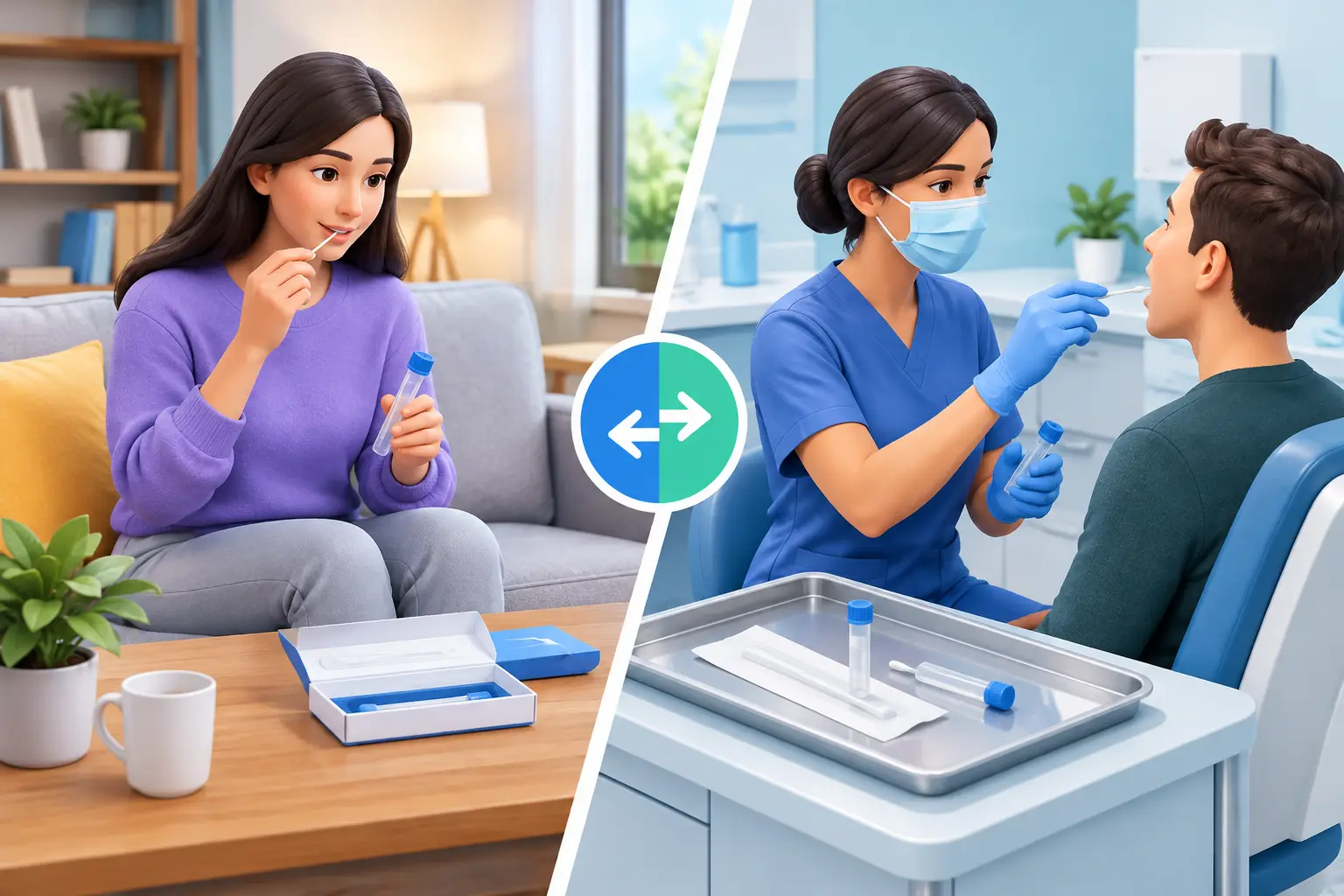
A blood test should fit around your life, not create another difficult appointment to arrange. When considering home collection versus clinic collection, the right choice depends on the test you need, how confident you feel taking a sample, and whether a finger-prick or professionally collected venous sample is required.
Both routes can provide access to professional laboratory analysis. The practical difference is how the sample is collected, how much blood is needed and the level of support available at the point of collection. Understanding those differences helps you choose confidently and prepare properly.
What home blood collection involves
Home collection usually involves an at-home kit containing clear instructions, a regulated sample-collection device, the items needed to collect your blood, and packaging for returning the sample to the laboratory. For many suitable tests, a finger-prick sample is collected into a small tube or collection device and returned by post using the supplied return method.
This option is designed for people who value privacy and flexibility. You can collect your sample at a suitable time, without travelling to a clinic or taking time away from work. It can be particularly useful if you live some distance from a collection centre, have a demanding schedule, or would simply prefer to complete the process at home.
Modern home-testing pathways are not informal alternatives to laboratory testing. The quality of a result relies on using the correct device, following the instructions carefully, packaging the sample correctly and returning it promptly. At MedTech Services Laboratory, suitable home samples are analysed by a UKAS-accredited laboratory, using an MHRA-regulated IVD sample-collection device designed to support safe transport and reliable processing.
When home collection may suit you
Home collection can be a practical choice for routine blood-health checks and selected biomarker panels where capillary blood from a finger prick is appropriate. It is often chosen for monitoring health markers over time, checking specific nutritional or hormonal markers, or arranging a test discreetly.
It is best approached when you can set aside uninterrupted time and have warm hands, good lighting and a clean, comfortable space. Reading the instructions before opening the kit makes a real difference. Many collection issues arise not from the finger prick itself, but from rushing, using cold hands or not allowing enough time for the required sample volume.
Home collection may be less suitable if you are uncomfortable with blood, struggle with dexterity, have previously found finger-prick sampling difficult, or need a test requiring a larger volume or a specific type of sample. The individual test instructions should always guide your decision.
What clinic collection involves
Clinic collection means your blood sample is taken by a trained professional, usually by venepuncture from a vein in your arm. The collector will verify the relevant details, prepare the site, take the sample and ensure it is labelled and handled correctly for onward laboratory processing.
For some people, this is the simplest option. You attend at an arranged time, the collection is completed for you, and there is no need to judge whether you have collected enough blood yourself. It is also the usual route where a test needs venous blood, multiple tubes, a larger sample volume or particular handling conditions.
A clinic appointment can provide added reassurance if you are testing for the first time, have questions about the collection process, or have experienced faintness or difficulty during blood tests before. Tell the collector about previous concerns, medications that may affect bleeding, or any history of feeling unwell during blood draws. They can help you position yourself appropriately and take reasonable steps to make the appointment more comfortable.
When clinic collection may suit you
Clinic collection is often the better fit when the available home kit does not cover your chosen test, when you require several tests at once, or when a venous sample is specified. It can also be preferable if you want the certainty of a professionally collected sample and immediate handover into an established handling process.
The trade-off is convenience. You will need to book, travel and attend within the clinic’s opening hours. Depending on where you live and work, that may be a minor inconvenience or the deciding factor. For a busy professional, home collection may save valuable time. For someone who finds self-collection stressful, an appointment may save worry.
Home collection versus clinic collection: the key differences
The most useful question is not which option is universally better. It is which option is suitable for your test and most likely to give you a successful collection experience.
Home collection gives you control over timing and location. It can reduce travel, preserve privacy and make routine testing easier to repeat. However, you are responsible for carrying out each step, from preparing your hands to posting the sample within the required timeframe. If the sample is insufficient, damaged or delayed in transit, a retest may be needed.
Clinic collection offers professional support at the collection stage. Venous sampling can enable tests that cannot be performed from a finger-prick sample and may be more appropriate where larger volumes are required. In return, it involves an appointment and travel, and may have a separate collection charge depending on your chosen service.
Neither route changes the need for appropriate laboratory standards. Once a suitable sample reaches the laboratory, it should be processed under controlled procedures. Turnaround times vary by test, but samples at MedTech Services Laboratory are typically processed within four hours of arrival, with results available from approximately 24 hours for applicable tests.
How to choose the right collection method
Start with the test itself. Check whether the test is offered as a home finger-prick kit, requires clinic collection, or gives you a choice. This is more than a matter of preference: some biomarkers, test methods and sample volumes have specific collection requirements.
Next, consider your circumstances. If you can follow instructions carefully and want to test at a time that suits you, home collection may be ideal. If you would feel more confident with a professional taking the sample, or your test requires venous blood, book clinic collection.
Preparation matters for either choice. Follow any fasting instructions exactly, stay hydrated unless told otherwise, and check whether supplements, medicines or recent exercise could affect the timing or interpretation of your test. Do not stop prescribed medication unless a clinician has advised you to do so.
If you are testing because of new, severe or worsening symptoms, a private blood test should not delay urgent medical care. Contact an appropriate healthcare professional or use urgent services where needed. Blood-test results are one part of a wider clinical picture, and abnormal or concerning findings may require follow-up.
Getting the best possible sample at home
A few practical habits can make home finger-prick collection easier. Choose a time when you are not rushed, drink water beforehand if permitted, and warm your hands naturally before starting. Wash and dry your hands thoroughly, then follow the kit instructions in the stated order.
Keep the collection tube upright where instructed, allow blood to fall into the tube rather than scraping or squeezing excessively, and complete the label and packaging steps carefully. Post or arrange return as directed, particularly where the kit specifies a collection day or return timeframe. These small details support sample quality and help avoid preventable delays.
If your attempt is unsuccessful, do not guess or improvise. Use the support route provided with your kit. A properly managed retest is preferable to sending a sample that may not be suitable for analysis.
A choice that should feel manageable
Choosing between home and clinic collection is about matching the method to your test, your confidence and your routine. Home collection puts a suitable blood test within reach from your own space; clinic collection provides hands-on professional support when that is what you need.
Before ordering, check the collection requirement for your chosen test and give yourself the conditions to do it properly. A well-prepared sample is the first useful step towards clear, clinically reliable information about your health.