
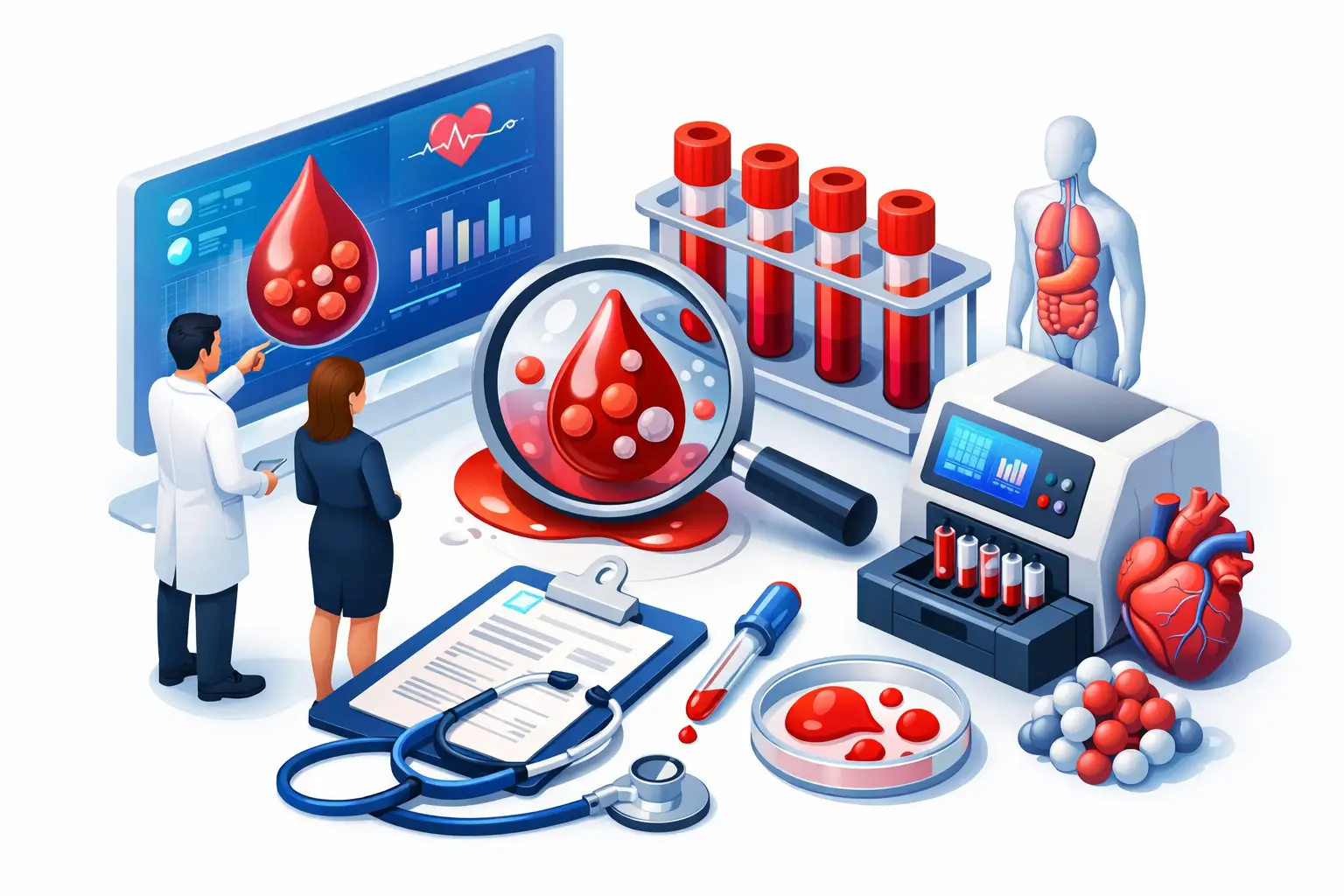
A demanding diary can make it easy to postpone routine health checks until a symptom becomes difficult to ignore. Executive health blood screening offers a practical way to review selected blood markers in one organised assessment, helping you understand your current health picture and identify where a conversation with a healthcare professional may be useful.
Rather than relying on a single measurement, a well-chosen screen considers several body systems together. It can be particularly useful for busy adults who want clear, private access to laboratory testing, whether they are focused on prevention, managing an existing concern, or monitoring the effect of lifestyle changes.
What is executive health blood screening?
Executive health blood screening is a broad blood test or panel designed to assess key markers linked to general wellbeing and common health risks. The exact markers vary between providers and packages, but a comprehensive screen often brings together measurements that would otherwise be ordered separately.
This may include a full blood count, kidney and liver function, cholesterol and other lipid markers, blood glucose or HbA1c, thyroid function, vitamins and minerals, and inflammation markers where appropriate. Some people may also choose to include hormone, iron-status or prostate-related tests depending on their age, sex, symptoms, medical history and clinical needs.
The purpose is not to produce a single verdict on your health. Blood results need to be read in context: your symptoms, medicines, family history, recent illness, exercise, diet and even hydration can affect some values. A screening result is most useful when it helps you make a sensible next decision, whether that means maintaining positive habits, repeating a test, or seeking medical advice.
Why a broader blood screen can be useful
A focused test can answer a focused question. For example, an iron profile may be appropriate when fatigue and low ferritin are suspected, while a thyroid test may be considered for symptoms such as unexplained weight change, palpitations or persistent tiredness. A broader screen is different. It is designed to provide a more joined-up view when there is no single obvious question, or when several factors may be relevant.
For professionals with long working hours, frequent travel, irregular meals or high training demands, this overview can be valuable. Markers relating to cholesterol, glucose control, liver function and nutritional status may support a more informed discussion about long-term health and day-to-day wellbeing.
There are limits. Normal results do not rule out every condition, and an out-of-range value does not automatically mean there is a serious problem. Reference ranges are based on populations, while an individual result may need follow-up to establish whether it is clinically meaningful. Screening should complement, not replace, NHS care, routine check-ups or urgent medical assessment when symptoms require it.
Which markers may be included?
The right executive health blood screening panel depends on what you want to understand. A sensible package should explain what is measured and why, rather than presenting a long biomarker count without clinical context.
General blood health and anaemia markers
A full blood count measures red cells, white cells, platelets and related indices. These results can help identify patterns that may warrant investigation, including possible anaemia or changes in white blood cell counts. Iron studies, vitamin B12 and folate may be added where nutritional status or fatigue is a concern.
Heart and metabolic health
A lipid profile commonly includes total cholesterol, HDL cholesterol, non-HDL cholesterol, LDL cholesterol and triglycerides. These markers can contribute to an assessment of cardiovascular risk alongside blood pressure, smoking status, family history and other factors.
Glucose and HbA1c provide different information about blood sugar. A glucose result reflects a point in time, whereas HbA1c indicates average blood glucose levels over roughly the previous two to three months. Neither should be interpreted in isolation when diagnosing or excluding diabetes.
Liver, kidney and thyroid function
Liver function tests assess enzymes, proteins and bilirubin. Results can be affected by alcohol intake, medicines, recent strenuous exercise and other factors, so unexpected findings sometimes need repeat testing or further assessment.
Kidney function is commonly assessed using creatinine, estimated glomerular filtration rate and electrolytes. Thyroid screening may include thyroid-stimulating hormone and, where appropriate, free thyroid hormones. These measurements can be especially relevant when symptoms suggest a possible thyroid imbalance, but symptoms alone can have many causes.
Personalised additions
A comprehensive screen can be tailored with additional tests where there is a clear reason. This might include vitamin D, sex hormones, insulin, allergy testing, autoimmune markers or a prostate-specific antigen test. More testing is not always better: specialised markers can be helpful when selected carefully, but they may create uncertainty if used without a relevant clinical question or suitable follow-up.
Choosing the right level of screening
Before ordering, consider what you want the test to help you understand. If you have a specific symptom, a targeted panel may be more appropriate than a general screen. If you are monitoring a diagnosed condition, follow the plan agreed with your GP or specialist, as they may need particular tests taken at set intervals.
It is also worth checking whether fasting is required. Some lipid and glucose tests may have specific preparation guidance, while other tests do not. Avoiding intense exercise and excessive alcohol shortly before collection may also be advised for certain markers. Following the instructions provided with your test helps protect the quality and usefulness of the result.
If you are pregnant, taking prescription medicines, receiving hormone treatment, or have a known medical condition, choose testing with appropriate clinical support. Do not stop or change prescribed medication because of a private blood result without speaking to the clinician responsible for your care.
A convenient route from sample to result
Modern blood testing can fit around a working week without compromising on laboratory standards. Depending on the test and your preference, you may be able to provide a finger-prick sample at home, return it by post using the supplied instructions, or arrange professional sample collection.
For home collection, it is essential to use the correct technique and complete the sample during the stated time window. A good kit should provide clear instructions, regulated collection equipment and secure packaging for return. Some tests require a venous blood draw because of the sample volume or analytical method needed; clinic-based collection is the more suitable option in these cases.
At MedTech Services Laboratory, samples are processed by a UKAS-accredited laboratory. Home-testing services use an MHRA-regulated IVD sample-collection device, with preservation technology designed to support reliable transport and laboratory processing. Most samples are processed within four hours of arriving at the laboratory, and results may be available from approximately 24 hours, depending on the test.
Digital delivery gives you private access to your results when they are ready. Where clinical review is included, qualified healthcare professionals can help identify findings that may need further attention. This matters because a result outside the reference range is a starting point for interpretation, not a diagnosis by itself.
Making results useful after the screen
Keep a copy of your results and compare like with like if you test again. Trends can be more informative than one isolated number, particularly for markers such as HbA1c, cholesterol, ferritin and vitamin D. Make sure repeat tests are taken under broadly similar conditions where possible.
If a result is markedly abnormal, if you feel unwell, or if you have concerning symptoms such as chest pain, severe shortness of breath, fainting or signs of a stroke, seek urgent medical help rather than waiting for a screening result. For non-urgent findings, a GP or relevant clinician can consider the result alongside your wider medical history and decide whether further investigation is needed.
The most valuable screen is one that answers a relevant question, is analysed to professional standards and gives you a clear route to appropriate next steps. Used thoughtfully, it can turn a health check from another item on the to-do list into a well-timed opportunity to pay attention to what your body may be telling you.