
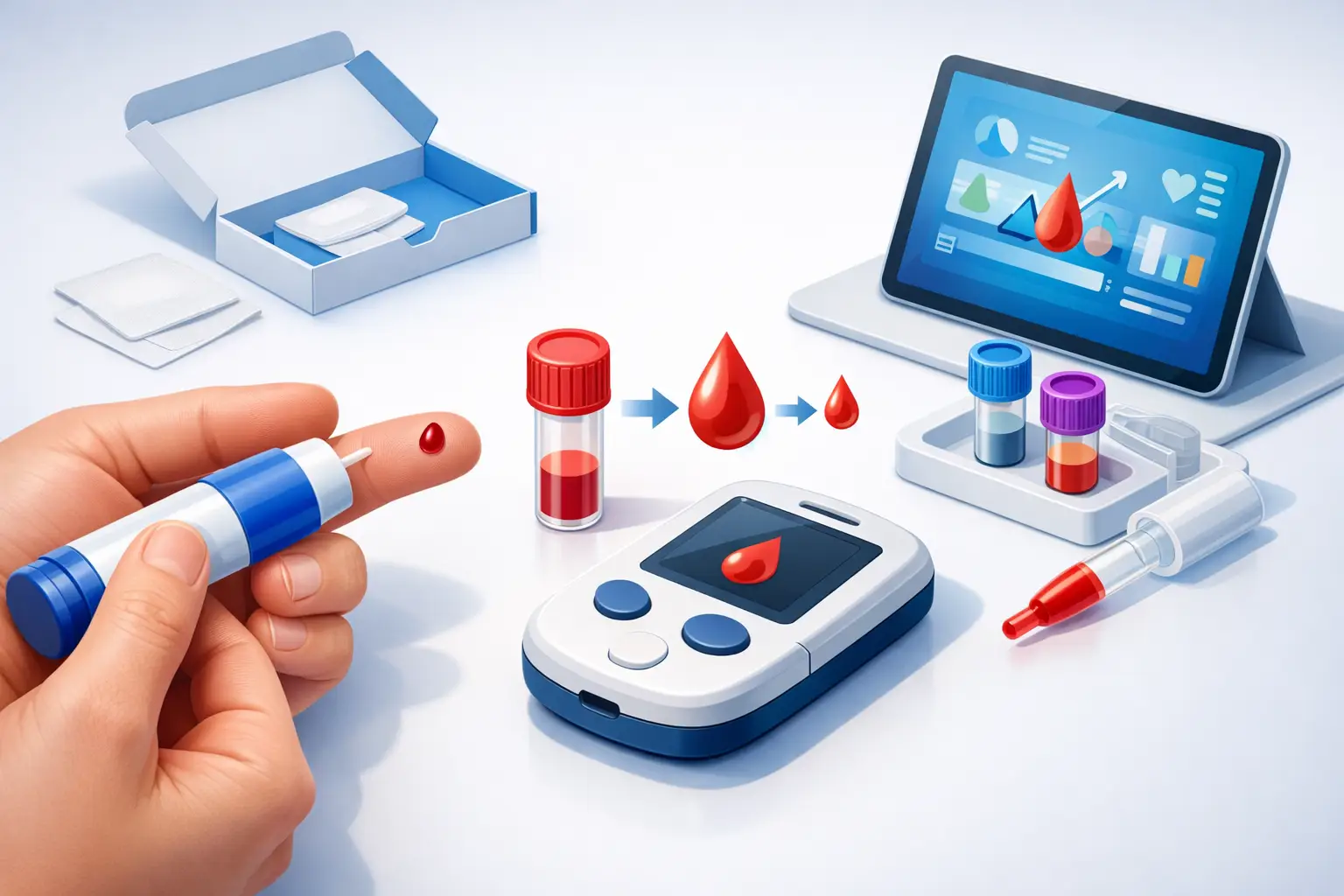
A blood test should fit around your life, not require you to rearrange it. A home finger prick blood test lets you collect a small capillary blood sample in private, post it to a laboratory and receive doctor-reviewed results digitally. For many routine and specialist markers, it is a practical route to the information you need without attending a clinic.
The value is not simply convenience. When collection, transport and laboratory analysis are designed properly, at-home testing can give you a timely view of important health markers – from iron and thyroid function to hormones, cholesterol and vitamins. It helps you move from uncertainty to an informed next step.
What is a home finger prick blood test?
A finger prick test uses a single-use lancet to make a small puncture in the side of your fingertip. You allow drops of blood to fall into a collection tube or onto a specialist collection device, depending on the test ordered. The sample is then sealed in the supplied packaging and returned to the laboratory for analysis.
This is different from a traditional venous blood draw, where a trained professional takes blood from a vein in your arm. Venous collection remains the better choice for some tests, larger sample volumes and people who find self-collection difficult. However, modern capillary collection systems can support a wide range of blood markers when they are validated for home sampling and handled correctly.
A reliable service is built around more than the lancet. Look for an MHRA-regulated IVD collection device, clear instructions, appropriate sample-preservation technology and processing by a UKAS-accredited laboratory. These controls protect sample quality from the moment you collect it to the point results are released.
When at-home testing can be useful
Home sampling is particularly helpful when you want to check a known concern, monitor a marker over time or take a broader look at your health. You might be experiencing tiredness and want to investigate iron, B12, folate or thyroid markers. You may be managing fitness goals and wish to check testosterone, vitamin D, lipids or glucose-related markers. Or you may simply want a convenient preventive health screen.
It can also suit busy professionals, people who prefer privacy, and those who live some distance from a collection clinic. Ordering a test does not replace clinical care, but it can give you useful evidence to discuss with a GP or healthcare professional.
Home testing is not appropriate for every situation. If you have severe chest pain, breathing difficulty, sudden weakness, heavy bleeding, signs of a serious allergic reaction or a mental health emergency, seek urgent medical help rather than waiting for a postal test result. Likewise, if you are under active care for a condition, follow the monitoring plan agreed with your clinician.
How a home finger prick blood test works
The process should be straightforward, but preparation matters. Following the instructions closely gives the laboratory the best possible sample to analyse.
1. Choose a test that answers a clear question
Start with what you want to understand. A focused test may be appropriate if you are monitoring a specific marker, such as ferritin or thyroid-stimulating hormone. A more comprehensive panel can be useful where symptoms are non-specific or you want a broader health overview.
Check whether the test requires fasting, a particular collection time or any preparation around supplements and medication. Do not stop prescribed medication unless a healthcare professional tells you to do so. Some hormones and metabolic markers vary during the day, while supplements can affect the interpretation of certain vitamin and mineral results.
2. Collect your sample at the right time
Your kit will normally include sterile lancets, a collection device, alcohol wipes, plasters, instructions, identification labels and return packaging. Read the instructions before opening the lancet. Choose a calm time when you are warm, well hydrated and unlikely to be interrupted.
Wash your hands with warm water and dry them thoroughly. Warm hands improve blood flow. Avoid using hand cream immediately before collection, as this may interfere with the sample. Clean the selected finger as directed, allow it to dry, then use the lancet on the side of the fingertip rather than the pad.
Let the first drop of blood form and follow your kit instructions on whether to wipe it away. Hold your hand below heart level and massage gently from the base of the finger towards the tip. Do not squeeze hard or repeatedly, as excessive pressure can affect sample quality. Allow drops to fall naturally into the tube or device until you reach the marked fill line.
3. Package and return it promptly
Once collected, secure the sample, apply the required label and place it in the provided protective packaging. Post it as soon as possible, using the return method stated in your kit. Some services provide tracked options, which offer added reassurance when you are sending a clinical sample.
Timing matters because blood changes after collection. Well-designed home kits use preservation engineering to support stable transport, but a sample should still be returned without delay. Avoid collecting immediately before a weekend or bank holiday unless the instructions confirm that return and laboratory receipt will be appropriate.
4. Receive clinically reviewed results
After your sample reaches the laboratory, it is checked for suitability before testing begins. Most samples at MedTech Services Laboratory are tested within four hours of laboratory arrival, with results available in as little as 24 hours for eligible tests. Your report is delivered securely and reviewed by a doctor, helping you understand whether a result is within the laboratory reference range and what action may be sensible.
Reference ranges are not a diagnosis. A result can be inside range yet still require discussion in the context of symptoms, medical history, age, sex, pregnancy status, medicines and previous results. Equally, a result outside range does not automatically mean you have a particular condition. It is a signal that may need clinical interpretation, repeat testing or further investigation.
Which markers can be tested from a finger prick sample?
The range depends on the collection method and the laboratory validation for each test. Home testing can cover many routine and specialist areas, including general health markers, cholesterol and lipid profiles, diabetes-related markers, liver and kidney indicators, iron status, vitamins, thyroid function, reproductive hormones, testosterone, cortisol, allergy markers and selected autoimmune tests.
A capable home collection service may support testing across more than 500 biomarkers. That breadth does not mean every marker belongs in every health check. The most useful test is one matched to your symptoms, goals or clinician’s advice. Testing more markers can provide a fuller picture, but it can also reveal borderline findings that need careful interpretation and may create unnecessary worry if viewed in isolation.
Getting an accurate sample at home
Most sample problems are preventable. Cold hands, dehydration, insufficient blood volume, incorrect labelling and delayed postage are common reasons a laboratory may be unable to process a sample. Give yourself enough time, drink water beforehand unless you have been told to fast, and do not rush the collection.
If the blood flow slows, pause and warm your hands rather than pressing aggressively on the finger. Use another supplied lancet only if your instructions permit it. If your sample is not accepted, a quality-led provider should explain why and offer clear next steps. A free retest guarantee can be particularly valuable where collection failure is outside your control.
Be honest on the health questionnaire, if one is included. Information about symptoms, medication, supplements and relevant health conditions helps ensure results are considered appropriately. Keep your report available for future comparison, particularly for markers that are best understood as trends rather than one-off numbers.
When to choose clinic collection instead
A professional blood draw may be the better option if you need a test that cannot be reliably performed from a capillary sample, require several tubes, have poor circulation, take anticoagulant medication or are anxious about using a lancet. It is also worth choosing clinic collection if you have previously struggled to obtain enough blood from a finger prick.
There is no single best collection method for everyone. Home sampling gives you flexibility and privacy; clinic collection offers professional assistance and can accommodate more complex testing. The right choice is the one that delivers a suitable sample for the information you need.
A home test is most valuable when it leads to a considered next step. Order the right panel, collect your sample carefully and use your doctor-reviewed results to have a more informed conversation about your health.