
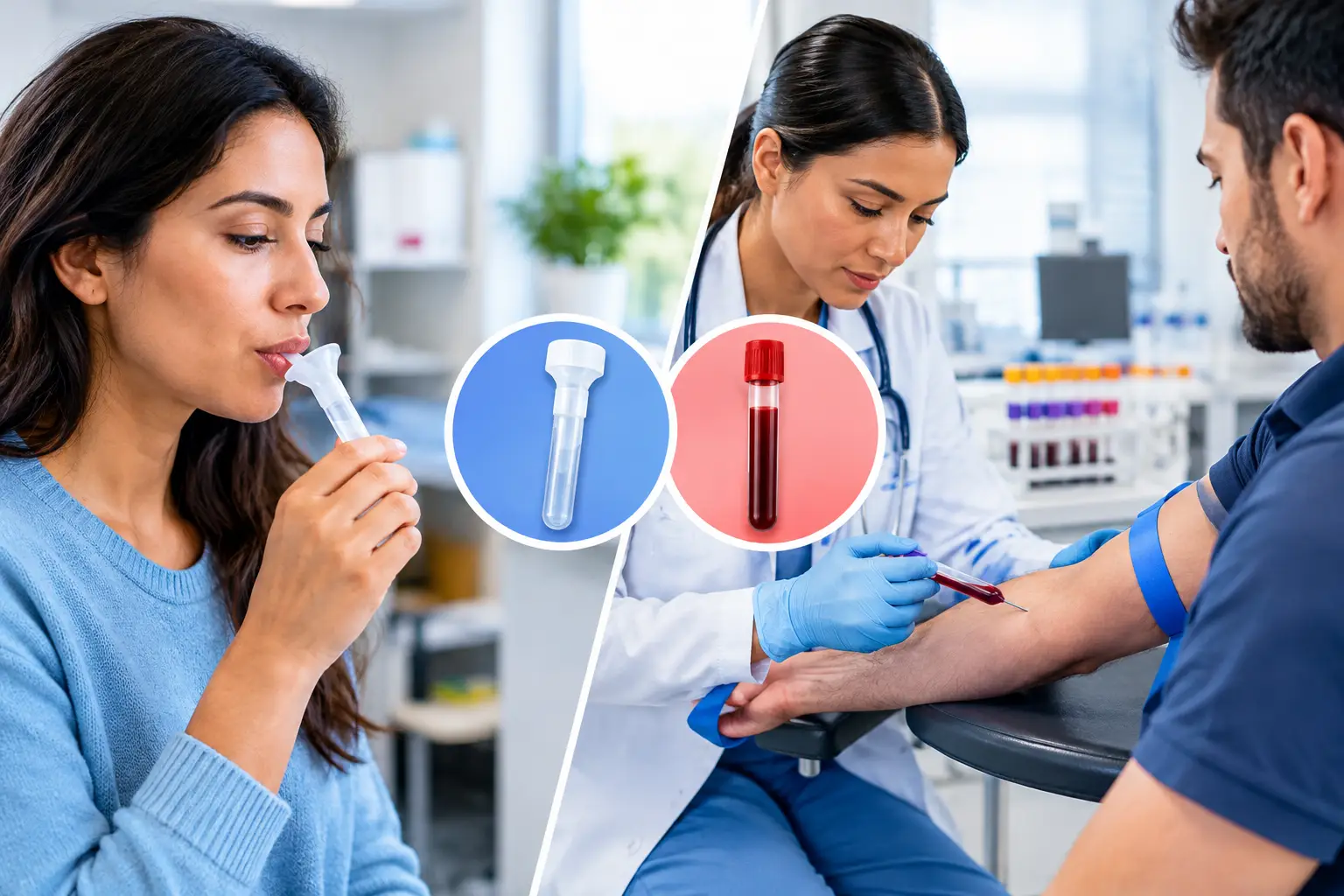
A hormone result can look precise on screen yet still be unhelpful if the sample type, collection time and clinical question do not match. That is the central issue in saliva versus blood hormone testing: the best option is not simply the most convenient sample, but the test that has been validated for the hormone and decision involved.
Hormones influence a wide range of body functions, including energy, menstrual cycles, fertility, mood, sexual health, metabolism and stress responses. They also change naturally throughout the day, across the menstrual cycle and in response to illness, sleep, exercise and medicines. A meaningful result needs to be interpreted in that wider context.
What does each sample measure?
Blood testing usually measures hormones in serum or plasma, depending on the laboratory method. It may measure total hormone levels, free levels or related markers that help explain how much hormone is available in the body. For example, sex hormone-binding globulin can be useful when assessing testosterone because it affects the proportion of testosterone that circulates in a free, biologically active form.
Saliva testing measures substances that pass from the bloodstream into saliva. For some hormones, it is intended to reflect the free fraction rather than the total circulating concentration. Collecting saliva is non-invasive and may be useful where repeat sampling at home is required. However, the amount present can be very small, and results can be more vulnerable to variations in collection and analysis.
Neither method is inherently right for every situation. The key question is whether the laboratory method, reference range and sampling protocol are appropriate for the hormone being assessed.
Saliva versus blood hormone testing: the practical differences
Blood hormone testing is widely used in routine clinical practice because many blood-based assays are established, standardised and supported by clinical reference ranges. Blood can also provide a broader picture. A clinician may assess related hormones, binding proteins and other health markers together, rather than relying on a single result in isolation.
Saliva collection can be appealing for people who dislike needles or need samples at several points during a day. Timing can be particularly relevant when a hormone follows a daily pattern. Cortisol is one example: in specific clinical pathways, late-night salivary cortisol may be used as part of an assessment for excess cortisol production.
That does not mean salivary testing is interchangeable with blood testing for every hormone. For many endocrine questions, blood remains the more established sample type. Results for hormones such as thyroid markers, reproductive hormones and testosterone are often interpreted using blood-based laboratory methods and reference intervals. A saliva result may not provide the level of clinical evidence needed to diagnose a condition, adjust treatment or investigate persistent symptoms.
Why sample quality matters
A hormone test is only as reliable as the sample that reaches the laboratory. Blood sampling has its own requirements. Fasting may be requested for some related metabolic markers, and collection time can be important for hormones such as cortisol or testosterone. Some tests are best taken on particular days of a menstrual cycle. Following the instructions closely makes the result more useful.
Saliva is more susceptible to practical interferences. Eating, drinking, brushing teeth, smoking, gum disease and traces of blood from the mouth can affect a sample. Hormone creams, gels or sprays can also contaminate saliva, hands or collection devices and may lead to unexpectedly high results. A sample may be easy to collect, but that does not remove the need for careful preparation and validated transport conditions.
Laboratory quality also matters. A professionally managed blood-testing service uses clear collection instructions, secure sample handling and an appropriate laboratory method for the requested biomarker. Where a home blood collection device is used, it should be regulated for its intended purpose and supported by sample-preservation and transport processes designed to protect sample integrity.
The challenge of changing hormone levels
A single hormone result is a snapshot. Levels can vary substantially, sometimes within hours. Cortisol usually follows a daily rhythm, with levels commonly higher in the morning. Testosterone can also vary by time of day. Oestradiol, progesterone, luteinising hormone and follicle-stimulating hormone change across the menstrual cycle, while menopause, pregnancy and hormonal contraception can alter expected patterns.
This variation is one reason results should not be interpreted as a simple pass or fail. A result within a laboratory reference range may still need discussion if symptoms are significant. Equally, a mildly raised or reduced result may reflect collection timing, recent illness, medication or normal biological variation rather than a medical condition.
For reproductive hormone testing, recording the first day of the last menstrual period and the usual cycle length can help place results in context. If you use prescribed hormone treatment, contraception, testosterone replacement or steroid medication, disclose this before testing. Do not stop prescribed medication solely to take a test unless a healthcare professional has advised you to do so.
When blood testing is often the more useful choice
Blood testing is commonly the practical starting point when you want an established assessment of endocrine or thyroid function, are investigating ongoing symptoms, or need results that can be discussed with a GP, consultant or other healthcare professional. It is also generally preferable when several related markers need to be assessed together.
A blood panel may be appropriate for concerns such as fatigue, unexplained weight change, irregular periods, reduced libido, acne, changes in hair growth, suspected thyroid dysfunction or questions around testosterone. The right panel depends on your symptoms, sex, age, medication and health history. Testing without a clear question can create confusing results and unnecessary anxiety.
Convenience does not have to mean compromising on laboratory process. Depending on the test, blood can be collected using an at-home finger-prick kit or through a professional collection service. The most suitable collection method depends on the biomarkers required, the volume of blood needed and your individual circumstances.
When saliva testing may have a role
Saliva testing may be considered when a specific, validated salivary assay is relevant to the clinical question, particularly where timed or repeated home collections are needed. It can be useful as part of a clinician-led plan rather than a broad screening exercise.
Be cautious of services that imply a saliva test alone can diagnose complex hormonal conditions or identify a universal “hormone imbalance”. That phrase is widely used but not a medical diagnosis. Symptoms such as tiredness, low mood, sleep disturbance and weight changes can have many possible causes, including anaemia, thyroid conditions, nutritional deficiencies, stress, poor sleep and metabolic health.
If your result is unexpected, do not self-prescribe hormones or supplements based on one test. Repeat testing, a blood-based measurement or a clinical review may be needed before any decision is made.
How to choose the right hormone test
Start with the reason you are testing. If you have a specific symptom or are monitoring a diagnosed condition, choose a test designed for that purpose rather than the largest available panel. Check which sample type is used, whether collection must take place at a certain time, and whether fasting or menstrual-cycle timing applies.
Look for a provider that explains the collection process clearly and uses appropriate laboratory standards. For blood testing, consider whether the laboratory is UKAS-accredited for relevant activities, how samples are transported and processed, and whether professional review is available where clinically appropriate. Clear results should identify the biomarker measured, your result, the relevant reference range and any recommended next steps.
At MedTech Services Laboratory, blood-based testing is designed to give customers a convenient route to professionally processed results, with options for home or clinic-based collection depending on the test. If a result is outside the expected range, or symptoms are ongoing or worsening, seek advice from a qualified healthcare professional.
A well-chosen hormone test should leave you with a clearer next step, not just more numbers to interpret. Match the sample to the clinical question, follow the preparation guidance carefully and use the result as part of a wider conversation about your health.