
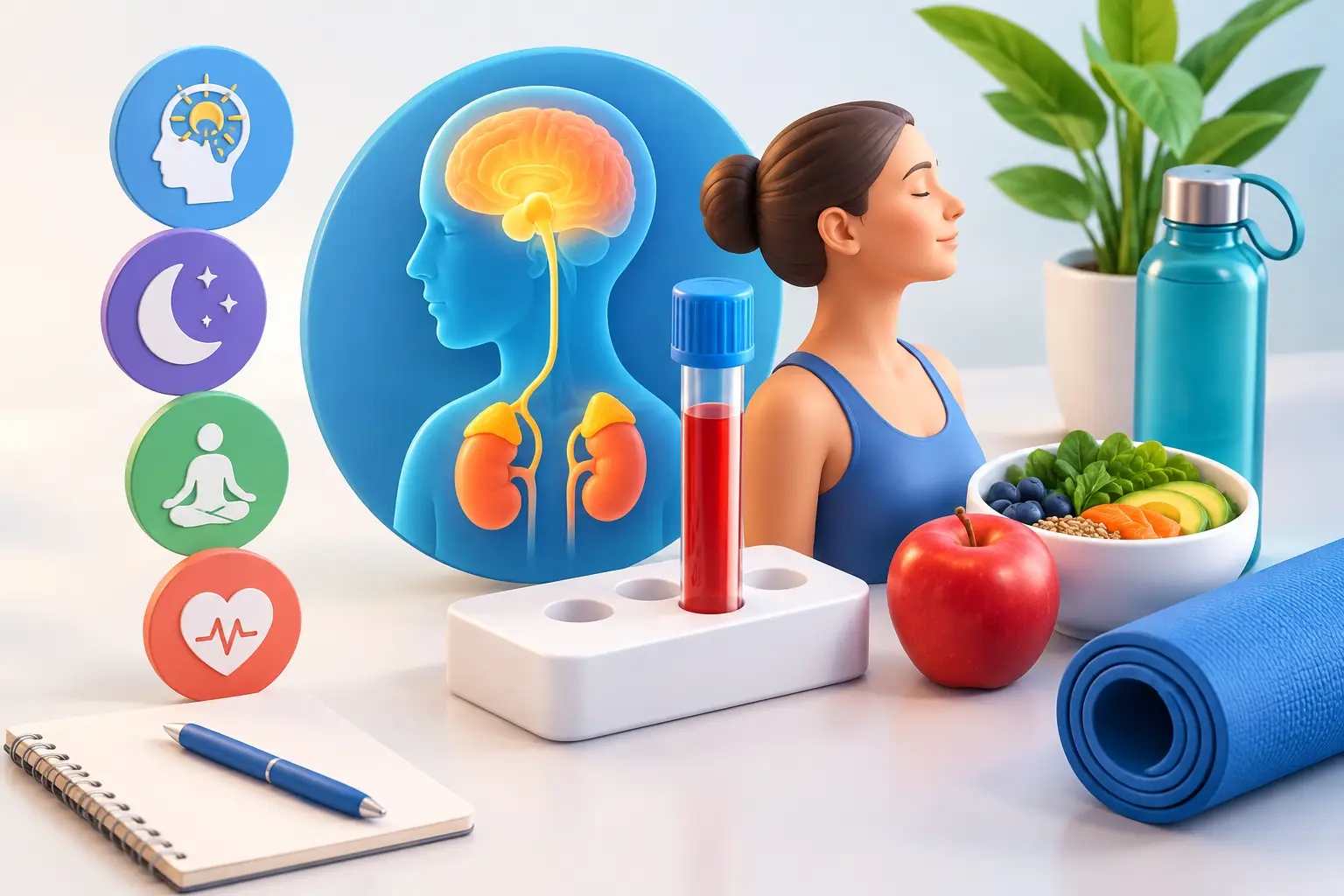
Feeling exhausted but unable to sleep, gaining weight around the middle, or experiencing persistent stress can lead people to ask whether cortisol is involved. Cortisol testing can provide a useful piece of the clinical picture, but the result only has meaning when the right sample is collected at the right time and interpreted alongside symptoms, medicines and medical history.
Cortisol is often called the stress hormone, yet its role is much broader. It helps regulate blood pressure, blood sugar, inflammation, energy availability and the body’s response to illness. It also follows a natural daily rhythm. Levels are normally highest shortly after waking and lower later in the day, which is why a single result should never be viewed in isolation.
What cortisol testing measures
Cortisol testing measures the amount of cortisol in a blood, saliva or urine sample. The most suitable method depends on the question being investigated and the advice of a healthcare professional.
A blood cortisol test is commonly used to measure cortisol at a specific point in time, often in the morning when levels should be at their highest. It may help a clinician investigate possible underproduction or overproduction of cortisol by the adrenal glands. Depending on the result, further tests may be needed to assess the wider hormone pathway, including adrenocorticotropic hormone, often called ACTH.
Saliva testing can be useful when cortisol needs to be assessed at particular times of day, especially late at night. A 24-hour urine collection may also be used where a clinician needs to estimate total cortisol production over a full day. These approaches are not interchangeable, so it is worth checking that the test you select matches the clinical question.
When a cortisol test may be considered
Cortisol testing is not a general measure of how stressful your life feels. Everyday pressure, poor sleep, intense exercise and a recent illness can all affect cortisol temporarily. Testing becomes more clinically relevant where symptoms, examination findings or other blood results suggest an adrenal or pituitary hormone concern.
A clinician may consider testing where there are symptoms associated with low cortisol, such as ongoing tiredness, weakness, nausea, reduced appetite, unintentional weight loss, dizziness or low blood pressure. These symptoms can have many possible causes, including anaemia, thyroid disorders, infection, nutritional deficiencies and medication effects. Testing helps narrow down the possibilities rather than confirm a diagnosis on its own.
Testing may also be used when there are signs associated with excess cortisol. These can include unexplained weight gain around the trunk, easy bruising, muscle weakness, high blood pressure, raised blood glucose, changes in mood, or wide purple stretch marks. Again, these signs do not automatically mean cortisol is the cause. They warrant an informed clinical assessment.
For people already under specialist care for an adrenal, pituitary or hormone-related condition, cortisol measurements may form part of ongoing monitoring. The required timing and test type should be directed by the treating clinician, particularly if treatment is being adjusted.
Stress, fatigue and the limits of a single result
It is understandable to look for a straightforward explanation when stress and fatigue have become part of daily life. However, a normal or abnormal cortisol result cannot by itself diagnose burnout, chronic stress or the broad set of symptoms sometimes described as “adrenal fatigue”. Adrenal fatigue is not a recognised medical diagnosis.
A useful testing plan starts with the pattern of your symptoms. Fatigue that follows heavy periods may justify checking iron status. Persistent tiredness with feeling cold, constipation or weight change may lead to thyroid testing. Frequent thirst or increased urination may prompt glucose testing. In some situations, a cortisol result may be relevant alongside these markers, rather than instead of them.
Timing can change your cortisol result
Cortisol follows a circadian rhythm, so collection instructions matter. If your test is designed for a morning sample, collect it within the stated time window. A sample taken much later may be difficult to compare meaningfully with the laboratory reference range for an early-morning result.
Try to follow any preparation guidance provided with your test. This may include avoiding strenuous exercise before collection, recording relevant medicines, or collecting at a specified time. Do not stop prescribed medication simply to prepare for a test unless the clinician managing your care has specifically advised you to do so.
Steroid medicines deserve particular attention. Tablets, injections, inhalers, nasal sprays, skin creams and some joint treatments can affect cortisol testing or interfere with interpretation. Oral contraceptives, hormone replacement therapy and certain anti-seizure medicines may also influence results in some circumstances. Tell the reviewing clinician and laboratory service about medicines and supplements you use.
Acute illness, a disrupted sleep schedule, pregnancy and recent major physical stress can also affect results. If you have been unwell or have worked overnight shifts, ask whether the planned timing is still appropriate. Sometimes postponing a non-urgent test gives a more representative result.
How blood cortisol testing works
The collection method should be practical, but analytical quality must remain the priority. Depending on the test and its requirements, a blood sample may be collected at home using a suitable finger-prick device, returned by post using the supplied packaging, or taken through a professional sample-collection appointment.
Before ordering, check the sample type, required collection time and whether the test is appropriate for home collection. Some cortisol investigations require a venous blood draw, timed saliva samples or a 24-hour urine collection. Choosing a test based solely on convenience can produce a result that does not answer your question.
For eligible home blood testing, a well-designed kit should include clear instructions, the regulated collection device, sample packaging and a secure return process. At MedTech Services Laboratory, samples are processed by a UKAS-accredited laboratory, with secure digital results and clinical review where this is included with the service. Following the collection instructions carefully helps protect sample quality from the moment you provide it.
What happens after your result is available
Laboratory reports usually show your cortisol result with a reference range. Reference ranges are based on results seen in a defined population and can vary according to the laboratory, sample type and time of collection. A result outside the range is a reason for clinical consideration, not a diagnosis by itself.
A clinician may compare cortisol with ACTH, electrolytes, glucose, thyroid markers or other relevant results. If low cortisol is suspected, further assessment may include a stimulation test performed in a clinical setting. If excess cortisol is suspected, repeat timed testing or specialist investigations may be required. These tests are designed to confirm whether there is a consistent hormone pattern, rather than relying on one measurement.
If your result is markedly abnormal, or if you have symptoms such as fainting, severe vomiting, confusion, severe weakness or very low blood pressure, seek urgent medical advice. Symptoms suggesting a potential adrenal crisis require emergency assessment and should not wait for an online result review.
Getting a result you can act on
The best value from cortisol testing comes from asking a focused question: what is being investigated, which sample type is needed, and who will help interpret the answer? If you are testing because of persistent symptoms, make a brief note of when they began, whether they fluctuate, any recent illnesses, and all medicines or supplements you take. This gives useful context if further medical advice is needed.
For proactive health checks, cortisol may be most helpful as part of a considered hormone or wellness assessment, not as a stand-alone score for stress. Choose a professionally processed test, collect your sample at the instructed time, and allow the result to guide a sensible next conversation with a qualified healthcare professional.
Your health is rarely explained by one number. A carefully timed cortisol result can still be a valuable starting point: clear evidence to discuss, questions to ask, and a practical route towards the right next step.